
"When the Chou tribe overthrew the last Shang king, they had to convince the people, especially the nobles, that they had the right to rule. The Chou told people that the Gods in Heaven had told them that they were to rule. This was called 'The Mandate of Heaven', heaven's orders.
"The Chou added that the Gods had warned them that they would only rule as long as they were good rulers. If they became selfish, and thought of themselves first, before the people, that Heaven would appoint another ruling family.
"No one knows if the nobles in ancient China believed this fairy tale, but they most probably thought that the Mandate of Heaven sounded like a good idea."
[Ancient China for Kids: http://china.mrdonn.org/mandateofheaven.html]
"The Chou added that the Gods had warned them that they would only rule as long as they were good rulers. If they became selfish, and thought of themselves first, before the people, that Heaven would appoint another ruling family.
"No one knows if the nobles in ancient China believed this fairy tale, but they most probably thought that the Mandate of Heaven sounded like a good idea."
[Ancient China for Kids: http://china.mrdonn.org/mandateofheaven.html]
 At no time in human history, in any culture anywhere on earth, have human beings simply passively accepted whatever the social, economic, and political status quo happens to be. Those who are out of power have always plotted to sieze power, and have often succeeded, while those in power have always been painfully aware of their vulnerability, and have often discovered first hand just how quickly and completely the most well ordered and firmly entrenched regime can be undone. Those who have been oppressed have always been aware of their oppression, and have always sought ways to ameliorate it, or, better yet, to end it altogether. And the oppressors have always been painfully aware of the fact that they are sorely outnumbered, and have often suffered violent deaths at the hands of their not-so-passively-accepting slaves, servants, serfs, and subjects.
In fact, one of the most obvious facts of human history is that human beings are constantly making conscious and very deliberate changes to the societies we live in (although, and as everyone knows, these changes rarely work out the way we hope). Kings and Queens have often pronounced sweeping reforms in order to create a more harmonious and stable, and/or a more enlightened and just, society. Peasants, workers, and common soldiers and sailors have often risen up in revolt with even more radical ideas about justice, and less concern about harmony. Other groups stuck in the middle (aristocrats, urban professionals, bureaucrats, merchants, etc) have often entered into shifting alliances with princes and paupers alike in order to protect what they already have, and also to extend their own rights and increase their share of the wealth.
Here is a typical example, describing events in China during the 3rd century B.C. (from Hardy and Kinney's The Establishment of the Han Empire and Imperial China):
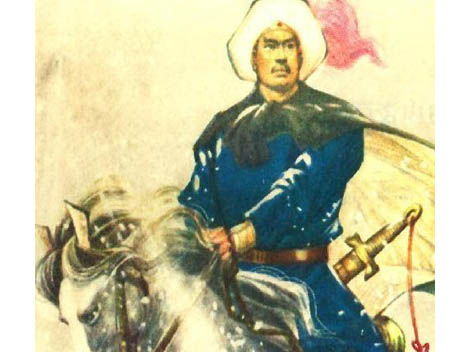
Well, fine, you might say. But isn't this just "the elites" playing power games among themselves? What about the peasants, huh? Yeah, well, the thing about that is this: Liao Bang, the first Han Emperor, was born a peasant.When the king of Qin gained dominion over all of China and established his own dynasty in 221 B.C.E., he dissolved the system of hereditary aristocratic ranks that had prevailed in China for centuries. Aristocrats suddenly found themselves stripped of their titles, and once independent and often warring kingdoms now fell under the administration of centrally appointed, non-hereditary officials. But for centuries already, observers had witnessed the gradually weakening, ever more corrupt, and increasingly dysfunctional nature of the now-rejected system of entitlement instituted by the Zhou dynasty almost a millennia earlier. Under the Qin, men (and to a lesser extent women) distinguished themselves not by birth but largely by their achievements in warfare and agriculture, and they could obtain non-hereditary titles and privileges within a system of ranks. But when the energetic and visionary First Emperor died in 210, his son proved unequal to the task of imperial rule, and the Qin Empire fell three years later. In 202, the fist Han emperor, Liu Bang, reorganized the administrative units of the empire, adopting for central China the Qin-dynasty system of commanderies -- controlled by centrally appointed governors -- and for east and north China, kingdoms.
[p. 69]

 None of this is news to anyone. Except possibly to David Loy, who is peddling an obscurantist view of Asians according to which they are incapable of scrutinizing the societies they live in, which sounds like a bizarre twist on the hackneyed stereotype of "inscrutable" Orientals.
Loy's argument is that Westerners, going back to the Greeks of the classical era, have demonstrated the ability to distinguish between (a) mere social convention, and (b) unchangeable laws of nature. Of course that is only half of it, the other half being that non-Westerners are, according to Loy, incapable of making this same distinction (or, at best, decidedly disinclined to do so). Loy explicitly claims that the ability/inclination to see, for oneself and without any outside coaching or prodding, that human societies are susceptible to change by human (as opposed to divine and/or supernatural) agents is "distinctly Western". (Scroll down for a link to Loy's 2009 article in Tricycle magazine propounding this view.)
Bah.
And again I say: Bah.
Submitted for the Gentle Reader's approval is the following birds-eye view of the social history of China from Elizabeth J. Perry's Challenging the Mandate of Heaven: Social Protest & State Power in China. The difference between David Loy's ahistorical clap-trap and actual history is positively jaw-dropping. But please, don't take my word for it.
No country boasts a more enduring or more colorful history of rebellion and revolution than China. The Chinese tradition of popular upheaval stretches back well beyond this century; indeed, records allow us to trace it as far back as 209 B.C. when the Chen She Rebellion helped to topple the mighty Qin empire and gave rise to famous Han dynasty. Over the ensuing millennia, popular protest has formed a constant and consequential theme in Chinese political history.
China's impressive record of rebellion and revolution is due not simply to the country's extraordinary size and longevity, but also to the fact that central elements in Chinese political culture have directly encouraged such protests. The Confucian (or Mencian, to be precise) concept of a "Mandate of Heaven" (tianming) bestowed instant legitimacy upon successful rebel leaders. This pragmatic precept differed markedly from European notions of a "divine right of kings" or the Japanese belief in an unbroken line of rulers descending from the Sun Goddess, myths that militated against challenges to the powers that be. In imperial China, one who managed to wrest the throne by force thereby gained the Confucian sanction for his rule: as the proverb put it bluntly, "He who succeeds is a king or marquis; he who fails is an outlaw." Of course this did not mean that imperial aspirants were free to ignore normative bounds. Future emperors were expected to demonstrate their claim to the Mandate by means of various divine omens, and needed to come to terms with Confucian elites if they were to harbor any hope of a long-lived reign. Still, the relative openness of the system stood in stark contrast to that of other imperial orders. Political challengers in China -- be they peasants or foreign invaders -- were permitted to make a bid for kingship through popular rebellion.
[page ix]

Further Reading:
- Direct link to Loy's article on: "Why Buddhism Needs the West"
- David Loy's "Buddhist" revanchism: five more counter-examples
- David Loy and the White Buddhist's Burden


