Showing posts with label Hinduism. Show all posts

Sunday, August 31, 2014

Top Ten Books Pagans Should Read About Hinduism

Hinduism represents, far and away, the greatest success story in the history of resistance to the spiritual predations of monotheism. Because of this, Hinduism serves not merely as a source of inspiration to modern Pagans, but as our single best source of information about what a living, modern polytheistic religious tradition looks like in full flower.

Because western culture is still so dominated by Christianity, often in ways that are (at least to the unitiated) quite subtle, finding reliable sources of information about Sanaatana Dharma can be quite a challenge. To assist anyone seeking such reliable information, the following list is presented for your critical appraisal. I hope to flesh this out more in the future. For now it's just titles and links.

  1.  Complete Idiots Guide to Hinduism, 2ed
    by Linda Johnsen (idiotsguides.com).

  2. Lost Masters: Sages of Ancient Greece
    by Linda Johnsen (shop.himalayaninstitute.org)

  3. Tantric Visions of the Divine Feminine: The Ten Mahavidyas
    by David Kinsley (www.ucpress.edu)

  4.  The Sword and the Flute: Kali and Krishna
    by David Kinsley (www.ucpress.edu)

  5.  Rebirth and Karma
    by Sri Aurobindo (www.lotuspress.com)

  6.  Defense of Hindu Society
    by Sita Ram Goel (www.voiceofdharma.com)

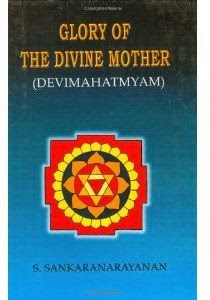
  7.  Glory of the Divine Mother: The Devi Mahatmya
    translated by S. Sankaranarayanan (books.google.com/)

  8.  Kali: Black Goddess of Dakshineswar
    by Elizabeth Harding (books.google.com)

  9.  Bhagavad Gita
    translated by Eknath Easwaran (www.easwaran.org)

  10.  Mother of the Universe: Visions of the Goddess and Tantric Hymns of Enlightenment by Ramprasad Sen
    translated by Lex Hixon (books.google.com)


Tuesday, February 4, 2014

"We call many of these religious movements something genuinely new, but ...."

In my previous post I looked at J. Gordon Melton's 2007 article on "New New Religions" ("What is wrong in some societies where new religions are relatively absent?"). In that post I also included a table listing some of the major "new religions" that have appeared in Japan since 1925. That table was drawn from a collection of essays by Susumu Shimazono titled From Salvation to Spirituality: Popular Religious Movements in Modern Japan (Trans Pacific Press, 2004). In a review of that collection, Daniel A. Metraux (a religion scholar of some note in his own right) describes Shimazono as "one of the foremost scholars of the contemporary religious scene in Japan." Metraux's whole review is available online here: http://www.globalbuddhism.org/6/metraux05.htm.

In this post I want to call attention to the fact that Shimazono has raised serious doubts about just how "new" the so-called shin-shûkyô of Japan really are, by emphasizing both (1) the fact that real objective similarities exist between the teachings of various ancient religious traditions (especially Buddhism and Shinto) and ideas characteristic of "new spirituality movements", and (2) the fact that many proponents of these "new spirituality movements" subjectively feel a very strong affinity to ancient traditions (especially Buddhism). In discussing this section in his review, Metraux appears willing to go a little further, or at least to be somewhat more direct, than Shimazono, when he (Metraux) states: "We call many of these religious movements something genuinely new, but scholars such as Shimazono correctly point out their strong roots in more traditional Buddhist or Shinto culture in Japan."

Here is the relevant section of Metraux's review of Shimazono's book:

Shimazono makes links between more traditional Buddhism and some of the New Religions and New Spirituality movements. There are concrete differences between the new spiritualism and traditional Buddhism in that some of these newer movements do not focus as much on an awareness of human suffering and lack a concept of personified agents such as God, gods, or a sacred Other. But, he notes (p. 302) that
[I]f we interpret Buddhism as a teaching that every person can undergo the Buddha’s enlightenment as one's own experience if one follows the righteous paths based on the truth, then Buddhism is rather close to the new spirituality movements and culture. Significantly, some persons involved in the new spirituality movements and culture are so sympathetic to Buddhism that they consider their own quest in the new spirituality movements and culture as merely a new evolution of Buddhism for the contemporary world.
This last point is well argued and most interesting. We call many of these religious movements something genuinely new, but scholars such as Shimazono correctly point out their strong roots in more traditional Buddhist or Shinto culture in Japan. To get back to the Soka Gakkai, there are those who assert that the Soka Gakkai is not a real "Buddhist movement," but Shimazono's chapters on the Gakkai, as well as Reiyukai and other Lotus Sutra-based New Religious Movements (NRMs), indicate that many of the most popular of these groups are indeed very Buddhist in their orientation — and quite traditionally Buddhist at that.
.

Wednesday, February 6, 2013

Rajan Zed's Mysterious Silence on Miley Cyrus' Latest Yoga Tweets

.
It has now been almost three week since Miley Cyrus tweeted the following:

"Bliss is unchanged by gain or loss"

"Para para paradise ... Rare to get a moment to thank the universe for all my blessings in the form of yoga in a place like this."


Inquiring minds want to know why Rajan Zed suddenly has nothing to say. Past Yoga-related tweets from Cyrus have resulted in rapid and fullsome responses from teh intertubes' favorite "Hindu Statesmen."

Some have speculated that Zed is pissed off at Cyrus because she has spurned his past overtures offering to be her Yoga teacher. Another theory is that Zed is miffed because Cyrus has also declined repeated requests that Cyrus volunteer to be a spokesmodel for one or more of Zed's innumerable self-aggrandizing "campaigns."


Related past posts from this blog:

Monday, January 7, 2013

Are modern Pagans morally and intellectually superior to adherents of "traditional and indigenous" religions?


There is another problem with the globalization of the term Pagan. It make us (real Pagans) think we are like other traditional religions like the Hindu, Buddhist, or Taoist traditions, or the indigenous cultures like the Shuar, Cherokee, or Yoruba, among so many others. We are not.
Do you think the Earth is the center of the Universe?
Do you think diseases are caused by germs and viruses?
Do you know about more elements than four (or five)?
Has the scientific revolution touched you?
Do you think democracy is a good idea?
In traditional and indigenous society the valences of the above questions are reversed and we are in no position to go back to them. (Everyone in the room who is still alive because of antibiotics, raise your hand). In fact, these ideas are so important that traditional and indigenous societies are adopting them and adjusting themselves accordingly. Good for them, but these ideas are *native* to us. We figured them out, for the most part, and they changed us permanently.
[Sam Webster, "Welcome, Thinking Pagans"]


The above quote is from an online article by Sam Webster smugly entitled "Welcome Thinking Pagans." Webster's casual ethnocentrism is, sadly, all-too common among well-educated modern "liberal" Westerners. Another example of this kind of ethnocentrism, and one which I have previously written about in this blog, is the claim made by David Loy, a prominent American Western Buddhist writer, to the effect that the very concept of social justice is utterly foreign to non-Westerners in general and Asians in particular, and that Asian Buddhists require the guidance of Western Buddhists in order to overcome this deficiency (see  David Loy & the White Buddhist's Burden). The same conceit can also be found in another contemporary Western Buddhist writer, Stephen Batchelor, as I have also discussed elsewhere (see Reason #7 in Top Ten Reasons Why Stephen Batchelor is Full of Shit). And the same kind of ethnocentrism is also implicit (and sometimes explicit) in the writings of the New Atheists (such as Richard Dawkins and Sam Harris) whenever they deign to discuss religions other than Christianity and Islam (such as Buddhism and Hinduism).

But lets return to Sam Webster, and his claim that "traditional and indigenous" cultures have their "valences" "reversed" when it comes to things like science and democracy. Better yet, let us turn away from Webster and instead look to the writings of a genuine expert on the subject of democracy and social justice: Martin Luther King, Jr.

As always happens with the best and the brightest, Martin Luther King, Jr. searched for a guiding philosophy while he was a college student, a journey that he continued in even more earnest as a young seminarian. What he was looking for, as he later recounted it, was a world-view that applied “the love ethics of Jesus” to the problem of social injustice.

During this “intellectual odyssey”, as King himself called it, he studied the works of Thomas Hobbes, Jeremy Bentham, Jean-Jacques Rousseau, John Stewart Mill, John Locke, Friedrich Nietzsche, Georg Wilhelm Friedrich Hegel, Karl Marx, and Vladimir Lenin, as well as Christian authors such as Walter Rauschenbusch and Reinhold Niebuhr, and also ancient authors especially Aristotle and Plato. In particular, King struggled long and hard with the writings of Niebuhr, especially wrestling with Neihbur's rejection of pacifism.

In addition to the above listed writers, King was also was personally influenced, during his studies at the Boston University School of Theology, by Walter Muelder, Allan Knight Chalmers, Edgar S. Brightman, and L. Harold Dewolf. It was under the mentorship of Dr. Brightman that King undertook a close study of Hegel, and King would later say that Brightman had provided him with ‘the metaphysical and philosophical grounding for the idea of a personal God’’ [Papers 4:480].

But none of these Western philosophers, revolutionaries, teachers, and theologians, either living or dead, provided what King was looking for.

In his book Stride Toward Freedom: The Montgomery Story, King wrote: “Prior to reading Gandhi, I had about concluded that the ethics of Jesus were only effective in individual relationships …. But after reading Gandhi, I saw how utterly mistaken I was.” Moreover, in King’s estimation, “Gandhi was probably the first person in history to lift the love ethic of Jesus above mere interaction between individuals to a powerful and effective social force on a large scale.” King wrote further that: “The intellectual and moral satisfaction that I failed to gain from [Bentham, Mill, Marx, Lenin, Hobbes, Rousseau, and Nietzsche] I found in the nonviolent resistance philosophy of Gandhi. I came to feel that this was the only morally and practically sound method open to oppressed people in their struggle for freedom."

Martin Luther King, Jr. is unquestionably one of the most celebrated champions of social justice and the basic principles of democracy in modern history. His search as a young man for a guiding philosophy was based both on moral and intellectual requirements. He was not looking merely for a philosophy that expressed the moral sentiment of social justice, but one that met the intellectual challenge of showing how to apply a philosophy of compassion not just to interpersonal relationships, but to the much broader realm of social change, up to and including social change on global scale.

Those who naively privilege the modern West as the sole font of democracy, equality, and liberty, really need to closely study that figure who, more than anyone else, personifies the modern conception of progressive social change: Martin Luther King. Anyone who makes such a study cannot help but conclude that not only does modern Western culture have no monopoly on "social justice", but that, as a matter of fact, we in the West have much to learn from others.


Also see these related posts from this blog:

Wednesday, December 26, 2012

Koenraad Elst vs. an "Eminent Historian"

Hinduism is, by far, the single most important example of a religious tradition that has successfully resisted the onslaught of monotheism in all its forms. Having withstood Islamic invasions, Christian colonialism, Communist infiltration, and even the combined alliance of Christians, Muslims, and Marxoid "Secularists", Mother India stands tall and proud as a beacon of hope to all the Pagans of the world.

And here, by "Pagan" I mean not just those who espouse the Wiccan Rede, or who endeavor to "reconstruct" the Heathen ways of pre-Christian Europe. I mean all those hundreds of millions of human beings in Africa, the Americas and throughout Asia who keep the old ways alive and who worship the Gods, Spirits, Ancestors, etc, who have been venerated since the dawn of humanity itself.

Anyhoo. Koenraad Elst has fought in these trenches as long as anyone currently drawing breath. So, if you are up for a little scholarly inside baseball, you really should read his most recent blog entry: A debate with an eminent historian.

Here are three excerpts to whet the intellectual appetite:

[I]t is not true that Aurangzeb [sixth Moghul Emperor, reigning from 1658 to 1707] was a cruel character, he was not more so than his less notorious predecessors. If he was cruel and fanatic, it was because he started taking the core doctrine of Islam to his heart. He was a pious person, more than is good for a ruler, so he became increasingly averse to the religious compromise on which his great-grandfather Akbar had built the Moghul empire. So at some point in his advancing years, not his personal predilection but his growing commitment to Islam took over. That is when he ordered all Pagan temples destroyed: when the Moghul empire became truly Islamic at last.


For lack of facts, Prof. Mukhia likes to throw names around instead. But a real historian remains unimpressed by this show of name-dropping. The fact that Prof. Mukhia has many like-minded colleagues in academe while his opponents have to remain on the outside is not the result of better competence among his friends, but of a deliberate policy in university nominations. Any young historian who lets on too early that he has pro-Hindu convictions, will see his entry into academe barred. Word will spread around that this man is “dangerous to India’s secular fabric” and he will be excluded. There have been some old historians who entered the profession before their cards were on the table and who only became forthright critics of Islam at the end of their careers, the likes of Prof. Harsh Narain and Prof. K.S. Lal, both since long deceased. Today among university historians, the school that sets the record on Islam straight is simply non-existent.


In several respects, Eaton’s count is incomplete [referring to RM Eaton's claim that only 80 Hindu temples were ever destroyed by Muslims]. Muslims destroyed Hindu temples before 1200 and after 1760 too, witness the near-absence of the once-numerous Hindu temples in Pakistan, witness the regular occurrence of temple destruction in Bangla Desh. It is also seriously false that for this period, Eaton’s count is complete. How could it be? Off-hand, Venkat could name a few cases from his own Tamil village, which was only briefly touched by the Islamic invasions but nonetheless already lost several temples, and they don’t figure in Eaton’s list. Archeologists regularly find remains of destroyed temples, often underneath mosques, which do not and cannot figure in Eaton’s list. Finally, one item on Eaton’s list doesn’t mean one temple destroyed. The thousand temples destroyed in Varanasi during Mohammed Ghori’s advances ca. 1194 form only one item on his list. What Mukhia calls “eighty” is in fact thousands of temple demolitions. So in spite of his Islam-friendly intentions, Eaton has only proven what Hindus have been saying all along: Islam has destroyed thousands of temples.   

Wednesday, May 23, 2012

Pre-emptive snark about Rajan Zed's forthcoming overtures to Miley Cyrus

Back in July of 2011 (getting close to a year ago now), Miley Cyrus tweeted: 'Dear Universe, For my next life can I please come back as some form of marine life?'

World Renowned Shameless Blowhard and Craven Self-Promoter Rajan Zed immediately lept upon this innocent example of a young person rejoicing in the beauty of nature (Miley was at the beach that day, enjoying the water), and fired off a salvo of press releases claiming that Cyrus was "endorsing" Hinduism, and taking the opportunity to volunteer to be her spiritual adviser (an offer he has also publicly made to Julia Roberts, Lady GaGa, Brad Pitt, Katy Perry, Russell Brand, Gisele Bündchen, and Lindsay Lohan, so far with no takers)

One shudders to think what Zed will make of today's bombshell revelation that Miley Cyrus is a proponent of meditation!

Linkage:

Miley Cyrus urges young girls to meditate to get real-life answers

From the desk of Rajan Zed: Miley Cyrus, Naked Yoga, the Church of Norway, and so forth ....

Rajan Zed: Some Negative Reviews

Thursday, May 10, 2012

The growth of Buddhism and Hinduism in the U. S.

In the 60s and 70s young people began to flock to "eastern" religions in an unprecedented way. For the first time in nearly two thousand years, westerners in significant (albeit still small) numbers were not merely leaving Christianity, but going somewhere else. And that "somewhere else" was, in large part, the religious traditions of the Sanatana Dharma: Buddhism and Hinduism.

At the same time that this was happening, America's racist immigration laws, which had been intentionally engineered to keep out non-Europeans and non-Christians, were radically liberalized. This resulted in a steady stream of new Asian immigrants to the U.S., a significant portion of whom were Hindus from India.

While still quite modest in absolute terms, the resulting transformation of the American religious landscape, when viewed in the proper historical context, has been dramatic and one could even say momentous. Every major American city, and a great many not-so-major ones as well, now have (1) their own Buddhist and Hindu Temples supported by local Asian populations, as well as (2) various of groups of home-grown "convert" Buddhists and Hindus. Sometimes the immigrants and home-grown converts intermingle, but often they form fairly distinct and separate religious communities.

Today anyone with an internet connection can go to google and search for Hindu Temples, Buddhist Temples, Zen Centers, Satsangs, etc, in their local vicinity. Here are some examples (these urls also illustrate the basics of how to "roll your own" google searches, in case you ever wondered):

Houston Buddhist Temples:
https://www.google.com/search?q=houston%20buddhist%20temples

Jacksonville Satsangs:
https://www.google.com/search?q=jacksonville%20satsangs

Memphis Hindu Temples:
https://www.google.com/search?q=memphis%20hindu%20temples

Oklahoma City Buddhism:
https://www.google.com/search?q=oklahoma%20city%20buddhism

Omaha Tibetan Buddhism:
https://www.google.com/search?q=omaha%20tibetan%20buddhism

For more on the growth of Buddhism and Hinduism in the U.S., check out this press release from Baylor University Professor J. Gordon Melton, who was in charge of assembling the data on Buddhists and Hindus for the U.S. Religion Census data just released by the Association of Religion Data Archive (link):

Buddhists and Hindus Are On the Rise Nationally, Baylor University Professor Says

Media Contact: Terry Goodrich, 254-710-3321, terry_goodrich@baylor.edu

WACO, Texas (May 8, 2012) - Hindu and Buddhist groups have grown steadily in the United States since changes in immigration laws in 1965 and 1992, with particularly high concentrations in Texas, California, the New York Metropolitan Area, Illinois and Georgia, according to a Baylor University professor who helped compile the newly released 2010 U.S. Religion Census.

"Both Buddhists and Hindus, though still relatively small compared to the large Christian groups, have grown to the point that they are beginning to exert significant influence on the key issues that most affect their lives," said J. Gordon Melton, Ph.D., Distinguished Professor of American Religious History with the Institute for Studies of Religion at Baylor University, who was in charge of assembling the data on both groups.

The census, the most comprehensive statistical assessment of data from the 2,000-plus religious groups active in the United States, is made every 10 years by the Association of Statisticians of American Religious Bodies. The complete summary may be viewed at this link: http://www.rcms2010.org/press_release/ACP%2020120501.pdf

Both Hindus and Buddhists have temples in most states, and "the groups now regularly voice their opinions on U.S. relations with predominantly Hindu and Buddhist countries," Melton said. "Like the Muslim congregations, Hindus and Buddhists are found in every part of the country, but they are concentrated in the big cities and still have not begun to appear in the smaller cities and rural areas."

Another significant finding was that all areas of American religion have grown, although specific groups -- especially some of the larger Christian churches -- have declined or stagnated.

Southern Baptists, whose ranks grew spectacularly for a generation as it became a national organization, decreased dramatically since the year 2000. United Methodist and Evangelical Lutheran membership also decreased.

Both Muslims and Mormons (Latter-day Saints) showed dramatic increases in percentages, the former from both immigration and penetration of the African-American community, the latter from movement out of its base in the Mountain states to all parts of the country. Muslims are distinct as the majority are of Indo-Pakistani background, the second largest group being African-American, with Arab Americans a distinct minority. There are now some 6 million Mormons and 2.6 million Muslims in the country.

Other findings showed that traditional patterns continue. The Baptist Bible Belt remains across the South, the older Reformation Protestant churches are strongest across the Midwest, Latter-day Saints dominate in the Mountain West, and Roman Catholics dominate in the northeast and southwest, including the southern third of Texas.

Rodney Stark, Ph.D., Distinguished Professor of the Social Sciences and co-director of the Baylor Institute for Studies of Religion, said the census in unique in its attempt to: (1) gather data from participating churches on a congregation-by-congregation basis; (2) compute membership in churches (as opposed to religious preferences as measured in national polls); and (3) assess data at the state and county level.

Wednesday, February 8, 2012

Hinduism, Paganism, & Polytheism

There has been a sudden flurry of interest in two very closely related questions about Hinduism:

1. What, if any, relationship exists between Hinduism and Paganism?
2. Is Hinduism polytheistic?

One of the main reasons for the current go-round on these two recurring topics is that the upcoming Pagan gathering, PantheaCon 2012, will feature a highly anticipated panel discusion entitled Hindus and Pagans Together: One Billion Strong (see the official schedule of events here). This panel will include two members of the Hindu American Foundation (link), Mihir Meghani and Raman Khanna, as well as Big Name Pagans Patrick McCollum and T. Thorn Coyle, and also Amadea, who has played a pivotal role in facilitating the newly blossoming relationship between Hindus and Pagans.

Another catalyst for the renewed discussion was an article by Huffington Post contributor Arvind Sharma with the provocative title Is Hinduism a Pagan Religion?, in which Sharma "defends" Hinduism against what he sees as the double slur that Hindus are both Pagans and polytheists. Sharma very nicely sums up his whole argument in a single sentence: "It is true that there are many gods in Hinduism and that it abounds in image worship, but while these various gods are considered different gods in paganism as traditionally represented, in Hinduism they represent the various forms of the one and same God."

Star Foster, a Pagan blogger at the religion megasite Patheos, took note of both the upcoming Pantheacon panel discussion and Arvind Sharma's article in her own contribution to the discussion: When Hinduism Confuses and Frustrates Me, which in turn sparked a lively and wide ranging exchange of views in the comments section.

What I would like to do now is to draw attention to some articles that I believe help to shed some light on these thorny issues. The first two of these are very recent and can be considered important contributions to the current round of discussion. The next four are less recent but still highly relevant. Following that there are some links to posts from this blog that also relate to the topic of Hinduism, Paganism, and Polytheism.

Vedic monotheism? 1. The dawn of monotheism
by Koenraad Elst, Feb. 7, 2012
[excerpt:]
Monotheism is not merely the cult of a single god, which would be called henotheism, but also implies the active rejection of all other gods. The recipient of monotheistic worship is not Heis Theos, “one god”, but Ho Monos Theos, “the only god”. Thus, Hindus worshipping an ishta devata, “chosen deity”, selected from among many, are henotheists but not monotheists. A Hindu who never worships any god except Shiva, but doesn’t object to his neighbour’s worshipping Krishna or Durga, fails the test of monotheism.

De-Monotheising the Human Mind the Hindu Way
by Ranbir Singh, Feb. 8, 2012
[excerpt:]
Almost a thousand years of cultural onslaught have left Hindus apologetic about their beliefs. They are keen to mould them into the framework dominated by a monotheistic mindset which holds sway even when it is mutated into terms such as rational, scientific and even atheist. Such is the power of monotheism that it infects even ideologies which purport to be antagonistic to any form of religious belief and it does so without most of us even realising.

Polytheism and Monotheism: A Hindu Perspective
Ramdas Lamb, Mar. 31, 2011
[excerpt:]
Today, the two most popular theological beliefs in the West are monotheism (the belief in a single all-powerful divinity) and atheism (the belief that there is no divine entity). The Abrahamic religions of Judaism, Christianity, and Islam preach the former, while those who base their world view exclusively on material or scientific rationality tend to adhere to the latter. Yet, in much of the rest of the world, polytheism, or a belief in multiple divinities, has been a long held and popular conviction. Atheists and Western monotheists together denigrate polytheists and their beliefs as either ignorant or pagan. The more conservative monotheists even equate them with evil and demonism. Such narrow minded views and biases have hampered many who adhere to western thinking from understanding the value and validity of polytheistic beliefs for the people who hold them.

Pagan Power in Modern Europe
by Hughes Henry & Ram Swarup (from Hinduism Today magazine, July, 1999)
[excerpt:]
"Pagan renaissance is overdue. It is necessary for Europe to heal its psyche. Under Christianity, Europe learned to reject its ancestors, its past, which cannot be good for its future also. Europe became sick because it tore apart from its own heritage, it had to deny its very roots. If Europe is to be healed spiritually, it must recover its spiritual past--at least, it should not hold it in such dishonor." [Ram Swarup]

Hindu Spirituality Versus Monotheism

by Sita Ram Goel, from his book Defense of Hindu Society (1983, revised 1987)
[excerpt:]
It is an intuition ingrained in the Hindu psyche to inhabit our entire environment - celestial, physical, vegetable, animal, and human - with innumerable Gods and Goddesses. Some of these divinities are installed in temples as icons, and worshipped with well-defined rituals. Some others are worshipped as and where they are invoked. Hindu shastras, saints and sages have paid homage to many Gods and Goddesses in many sublime hymns.

Hindus as “Indian Pagans”
by Koenraad Elst (from his book Who is a Hindu?, 2001)
[excerpt:]
All Indians who were not Parsis, Jews, Christians or Muslims, were automatically Hindus. So, the original definition of Hindu is: an Indian Pagan. Since the earliest use of the term Hindu in India, a clear definition has been given with it, and of every community it can easily be decided whether it fits that definition or not. It does not matter if you do not like the name-tag: if you fit the definition, you fall within the Hindu category. The Hindus have not chosen to be called Hindus: others have conceived the term and its definition, and Hindus simply found themselves carrying this label and gradually accepted it.

And here are a few things I have written in this blog on related topics (including a little something on Zoroastrianism, an appreciation of Arab polytheism, and my two recent posts of excerpts from Plotinus, among other things):

Tuesday, January 17, 2012

Toward a New Dharmic Vision of Humanity

Toward a New Dharmic Vision of Humanity
by Dr. David Frawley (Pandit Vamadeva)
(link to original at VedaNet.Com)

The Meaning of Dharma

Dharma is perhaps the key term for the great spiritual traditions of India and East Asia, Hindu and Buddhist, whether relative to their understanding of the outer world of nature or the inner realm of consciousness. It is the basis of India’s vast and diverse culture and its deep commitment to Yoga and meditation as tools of self-realization for all. A respect for Dharma is said to be more important even than a belief in God, because it implies certain values and a way of life that promotes truth, unity and respect for all life above ideas or emotions.

Dharma in Sanskrit comes from the root ‘dhri’ meaning ‘to uphold’ and is symbolized by a pillar. It refers to the spiritual, ethical and natural principles that uphold the entire universe. Dharma has always been linked to Veda or vidya, which refers to an inner capacity to perceive the nature of things. It reflects a higher awareness pervades and underlies all existence.

Dharma is a very difficult term to define and eventually must be understood in its own right. To provide a basis for this, we could say that Dharma indicates both the nature of reality at a universal level as well as the proper place for each thing in the universe according to its particular qualities and capacities. There is a specific dharma relative to each creature and every aspect of nature, as well as to the whole of existence. Dharma indicates the harmony both of the totality and the individual, which are complementary and interdependent. According to a dharmic view, the entire universe is present in each object and in every creature, which in some way embody or express the totality.

There is a dharma or natural way of working behind the great forces of nature, the five elements of earth, water, fire, air and ether, the seasons, the three worlds as earth, atmosphere and the heavens, and the different aspects of the cosmos as matter, energy, and light, which follow interrelated laws and patterns. There is a dharma or unique quality and energy in every plant and animal which serves to make it what it is. Everything has its place in the Dharma, which reflects its role in the cosmic order. And there is a special dharma or role on Earth for the human being, which is to seek to embody a higher truth and work to promote a higher consciousness in the world. The universe is an organically connected vibratory field in which all things are linked together into a greater network of harmony, beauty and vitality. This is the universal ‘web of dharma’.

There is dharma or way of right action relative to all aspects of human life and culture: a dharma of art, a dharma of business, a dharma of communication, a dharma of relationship, a dharma of science, a dharma of religion, and so on – each of which requires its own examination. What is done according to dharma is performed with grace, intelligence and respect for the natural order. Each different domain of our lives has certain principles and practices necessary to unfold its full potential, which constitute its dharma. If we follow the dharma in what we do, we will not only be successful, but will act so in a way that promotes the well-being of all.

We have our own individual or ‘svadharma’ that reflects our capacities and aspirations in life. Yet this is not something that divides us from others. Each person has similar potentials that we must honor.

The Social Dharma

Relative to society, the term Dharma is used in a special way as indicating the right way for society and its members to operate in harmony with their natures, with the environment and with the universe as a whole. This is what we could call the ‘social Dharma’. For social well being, there must be a proper understanding and implementation of Dharma on all levels.

In Vedic thought, human society is looked upon like the human body as a single organism with different limbs, organs and functions, which all serve the benefit of the whole. The social organism is one in essence, but the role of different individuals, communities or professions must vary in order to fulfill the diverse and specialized needs of the whole. Such social differences should not become a matter of high and low or good and bad, but an organic necessity in which each particular role is vital, just as each organ of the human body has an important and irreplaceable role in the well-being of the entire body. We cannot forget society’s connection with the Earth and nature, if we want society to be healthy, harmonious and without violence.

There are special principles of Dharma or right living for society, nations and communities, including special guidelines for men and women, the young and the old, for different professions and for different stages of life. There is an organic order to life, even at a social level, as there is in how our body functions.

However, Dharma also requires that our outer actions and life-styles change along with changing times and cultures. Dharma does not consist of rigid rules that can be blindly applied to all circumstances, but of guiding principles that require adaptation according to the differing needs of time, place and culture. The social Dharma cannot become rigid or the social organism will decline. This means that the vision of Dharma is more important than any specific formulation of dharma in a particular book or by a single person, though we should not discountenance the value of the dharmic wisdom from the past.

Today we need a new social dharma that can integrate what is best in science and technology while restoring our deeper connection with both Nature and the Spirit, such as the great seers of India maintained.

Dharma and Human Rights

Western political thought and modern democracies in general are based upon the idea of “human rights”, which are primarily defined on an individual basis, according to political ideals of freedom, equal opportunity, and justice for each person. These democratic principles have helped protect the individual, reducing oppression and discrimination on various levels within the society relative to race, ethnicity, gender, class, occupation, or other social affiliations.

Yet, on the negative side, an over fixation on “individual rights” encourages a mere outer freedom to do what one wants that can make people more aggressive and acquisitive, lacking an inner dimension of spiritual search. Outer freedom without a corresponding inner aspiration can become a license for the ego to do what it wishes, even if it causes eventual harm to others or to the environment. It often becomes a hectic pursuit of the material world, a running after the external allures of Maya.

The American Declaration of Independence is a very interesting document in this regard. It is based upon the three principles of “life, liberty and the pursuit of happiness” as the inalienable rights of man. Life and liberty are our inalienable rights to be sure, but the “pursuit of happiness” taken only at an outer level easily promotes an external seeking of enjoyment, pleasure and power. What you pursue or run after usually runs away from you! This pursuit of happiness or desire has given rise to the current commercial society that in many ways is becoming increasingly vulgar and destructive. Each individual tends to seek his or her rights, which easily lends itself to self-promotion over the greater good of all.

Dharma, on the other hand, teaches us that life, liberty and happiness are our inherent nature and can be found within ourselves, without the need for external seeking or accumulation of possessions. Dharma promotes freedom from any sort of outer dependency. This includes freedom from commercial exploitation and an inner orientation to life, which implies a spiritual search. Our role in life is not simply to gain what is due to us, as if the universe owed us a favor, but to help in the well-being of the world as a whole, which is part of our own greater nature. Our place in life is not simply to take, as if we existed in isolation, but to give, reflecting our relationship with the whole and the wholeness of who we really are.

Dharma and Duty

Dharma indicates duty, obligation, and responsibility as well as rights and freedom. Rights can never exist without corresponding duties and obligations. Unless rights and duties are balanced, the society itself will become imbalanced and disturbed. Each one of us no doubt has our individual place in the universe that must be honored and a destiny of our own to be fulfilled, but we must also respect the universe upon which we depend and realize that our well being can never be secured at the cost of that of others.

In this regard, Dharma is connected to the idea of giving, offering and sacrifice –what Vedic teachings call yajna. Yajna is symbolized by a fire sacrifice. Fire can only burn if given an offering of the proper fuel. Our place in life is to make the proper offering so that the universal fire of Dharma can illuminate both ourselves and the world around us. Ultimately, we must ourselves become an offering for all, rather than holding to our personal existence or private property as final.

Yajna says that our lives should consist of worship and honoring, including relative the Divine, our ancestors, other living creatures, all human beings, and the spiritual heritage of the entire human race. If each one of us acts for the good of all, we will all certainly flourish. If we act only for the good of ourselves, our family or our particular community, we will breed long term division, inequality and violence.

Broader Human and Universal Rights

According to the principles of Dharma, it is not only individuals that have rights but all aspects of the social organism and the world of nature as a whole. Families have rights, as do communities, including the right not to be interfered with or to be broken up. Cultures have rights not to be denigrated or exploited, even in the name of progress. Today in the name of individual human rights many traditional communities and cultures are being devalued and denigrated, if not eliminated, often paving the way for commercial exploitation.

The non-human world also has its rights. Animals have the right to live without human interference or exploitation and to have their natural space to move freely. Plants do so as well, as the plant also has consciousness and feeling. The world of nature does not exist solely for our own personal advantage as human beings. Each creature has its own existence that we must honor. Ecosystems also have a right to remain as they are and evolve according to their own energies, without being turned merely into human habitations or recreation sites.

When human rights do not respect the rights of other creatures, they invariably lead to conflict and problems in human society as well in the world of nature. The greater life organism of the biosphere gets damaged, which means that human beings will also not have a harmonious natural environment that can provide for health and well-being. This is what we are seeing today in which our environment has been damaged by making human needs, desires and profits predominate over the natural rights of other creatures and the sanctity of the Earth itself – in which we are failing in our duty to the universe in the blind pursuit of personal enjoyment.

Dharmic Pluralism

Dharma reflects a pluralistic view of life which honors unity in multiplicity. It recognizes that there is a diversity of human beings, with each individual being unique in one way or another. There cannot be one job all for all, one medicine for all, or even one religion or spiritual path for all.

Therefore, there should be a corresponding diversity in society in terms of culture, philosophy, art and spirituality so that each person or group has something that their particular Dharma can relate to and find fulfillment in. According to Dharma, unity lies not in uniformity of name, form or action but in the inner freedom that allows the individual to move through and beyond all outer forms to the inner essence that is one with all.

Dharma and Relativism

Dharma holds that we must look at each individual and circumstance according the particular situations, energies and capacities involved. For this reason, a Dharmic approach remains flexible and does not seek to impose any absolutes or rigid rules upon humanity. For example, if you are driving down a road you cannot follow a rigid set of rules or formulas; you have to actually see the movement of traffic moment by moment. Similarly, Dharma rests upon perception more so than any doctrine.

Yet Dharma is far removed from an ‘anything goes’ attitude or a mere moral relativism. Dharma says that there is a right and appropriate way to do each thing, whether it is right way to eat, a right way to breathe, or a right and respectful way to organize our societies, reflecting individual circumstances as well as the broader principles existence. This way of right action cannot be reduced to a fixed pattern but is not without enduring principles either. Dharma requires consciousness in its application and cannot be turned into a standardized creed or mechanical set of rules.

Dharma and Secularism

Dharma does not imply a rule of religion over life or society. Dharma and secularism, the idea that church and state should be separate, share certain attitudes, values and concerns. Dharma holds that a government should not be used to promote one religious belief or another. It holds to freedom of religion and says that the individual should have the freedom to pursue their own Dharma in life, free of control by the state or by any external institution.

Yet Dharma is different from secularism in certain ways as well. Dharma regards all life as sacred and so cannot accept a merely commercial view of life, which is the tendency of so-called modern secular cultures. Dharma says that we must respect the sacred aspect of human life and try to make our social actions into something respectful of the greater universe. Dharma can project a spiritual vision without violating the principle of individual freedom. This is because it sees the spiritual path as a matter of individual practice, an expression of freedom, not something enforced from the outside.

Dharma and Religion

Religion is often translated as Dharma in Indian thought today. This reflects another side of its meaning. Dharma like religion states that we should recognize the universal and the eternal and base our human culture on a spiritual goal or higher consciousness. However, Dharma cannot be reduced to one particular religion, book, teacher, revelation or another. Dharma is not based upon belief and does not seek to spread, much less impose, a single belief upon all humanity. Dharma accepts freedom of religion as well as a freedom of the individual not to follow any religion at all. Above all, it places individual spiritual practice over any overt religious institutionalism.

Dharma places the need to act for the good of all above any religious labels or differences. Dharma says it is what we do that matters, not what we call ourselves, and that truth ultimately transcends all names and boundaries. Dharma says that the supreme truth is impersonal, apaurusheya, and cannot be reduced to a human formulation or representative that all must follow, however helpful these may be for certain groups or individuals.

Yet a dharmic approach does recognize that different individuals, groups and communities may want to follow different spiritual and religious paths – which need not all be the same – and which may have their own respective practices, formulations and values. Dharma accepts pluralism in religion as in all of life, including the freedom of individuals to differ and disagree on matters of religion, as long as they do not turn these differences into a pretext for conflict and violence.

At a higher level, Dharma embraces Yoga as its Moksha Dharma or teaching about the liberation of the soul, which is a matter of sadhana or inner spiritual practice through the science and art of meditation.

Dharmic Values and Ethics

Dharma rests upon certain clearly defined universal values and ethics. These are not simply dictates, laws or commandments but a recognition of how life works and how we can attune ourselves to the consciousness of the greater universe. Such dharmic values are perhaps most simply defined in the basic principles behind Yoga practice of non-violence (ahimsa), truthfulness (satya), self-control (Brahmacharya), non-stealing (asteya) and non-acquisitiveness (aparigraha).

There is no living being that wants to be hurt. We ourselves do not want to be hurt, so honoring the universal dharma, the universal culture as it were, we do not seek to harm anyone. Similarly, we do not want to be deceived. There is no creature that wants to be deceived, so honoring the universal dharma we tell the truth. Dharmic ethics therefore are a matter of universal courtesy, as it were, not only towards others but also towards ourselves. Without such dharmic ethics we cannot have access to the cosmic mind or the greater civilization of the universe, which is one of consciousness, not merely of science and technology.

Towards a New Dharmic Movement

Today humanity is suffering from a global crisis, which is not simply a lack of resources but a crisis of values. Today we must learn to coexist and pluralism, not only at a political level but also at cultural and religious levels, is essential. We cannot survive as a planet by promoting national, cultural or religious boundaries as final, as that is to deny the greater unity and value of humanity as a whole. A new vision of Dharma can help us in this direction because Dharma does not divide human beings up into opposing camps. It says we are all of one family and must all eventually come to the same truth and self-realization, albeit according to our own path and in our own time and manner.

Great modern teachers from India like Sri Aurobindo, Mahatma Gandhi, Swami Dayananda (of the Arya Samaj) and Swami Vivekananda, and many others from all over the world have looked into and provided their insights about creating a new social order or Dharma. Many Buddhist teachers, like the Dalai Lama are also promoting a greater dharma for humanity.

Ultimately, there needs to be a new renaissance in dharmic thinking. This implies a great deal of questioning, deep thought and profound meditation – an endeavor that may take decades to come to real fruition. It must rest upon an uncompromising pursuit of truth, not simply an attempt at social accommodation, appeasement or pleasing everyone. A new dharmic order is not a simple matter of a new political party but an infusion of higher values into our social interactions, which means a new approach to politics that considers not only the outer human being but the inner essence of the soul.

Unfortunately, the political world today tends to rely upon slogans, vote banks and appeals to mass fears and desires, looking forward only to the next election. The personality of the political leader is made more important than any deeper vision for humanity. Political parties today are lacking in any real idealism and vision and quickly compromise in order to gain power or influence. Even modern education is imed at training a person more in a particular technical profession, rather than providing a well rounded education that includes an examination as to what is the ultimate meaning of life. Clearly Dharma must be brought back into education and into social service for it to affect society as a whole.

A new world order defined by Dharma – not simply by religion, politics, or commercial concerns – is crucial for our way forward as a species and can help promote and preserve the good in all. It is important that a regard for the universal Dharma is brought into both our personal lives and into our societies. Otherwise our civilization may continue to flounder and is unlikely to find peace or harmony with life. This is a matter first of all of upholding Dharmic principles and practices in how we live and think. The work begins with each one of us.

Tuesday, November 29, 2011

Hindu Fundamentalism Does Not Exist

Some things do not exist. For example, there are no active volcanoes in Belgium. Just as there is no ocean front property in Wyoming. Also there is no liquid water on the surface of Pluto. Nor are there any living veterans of the American Revolutionary War.

Question: Does "Hindu Fundamentalism" exist?

The word "fundamentalism" itself comes from debates among Protestant Christians in the United States during the late 19th and early 20th centuries. In those debates, far from being some kind of slur meant to conjure up visions of proto-fascist preachers whipping their flocks up into a xenophobic frenzy, it was a badge of honor proudly worn by self-defined "fundamentalists".

The idea that fundamentalism is a pathological condition to with all religions are equally prone and of which they are all equally guilty is a very recent development. But does this idea have any basis in reality?

In a very thoughtful article (first published back in June of 2010) over at the Patheos website, David Frawley poses the question: Is There Hindu Fundamentalism?

The short answer to that question, according to Frawley, is: "No." The long answer is: "Unequivocally, no."

Here is an excerpt:
No Hindus -- including so-called Hindu fundamentalists -- insist that there is only one true faith called Hinduism and that all other faiths are false. Hinduism contains too much plurality to allow for that. Its tendency is not to coalesce into a fanatic unit like the fundamentalists of other religions, but to disperse into various diverse sets and fail to arrive at any common action, historically even one of self-defense against foreign invaders.

Fundamentalist groups insist upon belief in the literal truth of one book as the Word of God, on which they base their behavior. Muslim fundamentalists insist that the Koran is the Word of God and that all necessary knowledge is contained in it. Christian fundamentalists say the same thing of the Bible. Again even orthodox or ordinary Muslims and Christians often believe this.

Hindus have many holy books like the Vedas, Agamas, Bhagavad Gita, Ramayana, and so on, which contain a great variety of teaching and many different points of view, and no one of these books is required reading for all Hindus. Hindus generally respect the holy books of other religions as well. What single holy book do Hindu fundamentalists hold literally to be the word of God, upon which they base their behavior? Christian and Islamic fundamentalists flaunt their holy book and are ever quoting from it to justify their actions. What Hindu Bible are the Hindu fundamentalists all crying, quoting, and preaching from and finding justification in?

Tuesday, September 13, 2011

"Challenging the Mandate of Heaven", Or, David Loy don't know much about history.

"When the Chou tribe overthrew the last Shang king, they had to convince the people, especially the nobles, that they had the right to rule. The Chou told people that the Gods in Heaven had told them that they were to rule. This was called 'The Mandate of Heaven', heaven's orders.

"The Chou added that the Gods had warned them that they would only rule as long as they were good rulers. If they became selfish, and thought of themselves first, before the people, that Heaven would appoint another ruling family.

"No one knows if the nobles in ancient China believed this fairy tale, but they most probably thought that the Mandate of Heaven sounded like a good idea."
[Ancient China for Kids: http://china.mrdonn.org/mandateofheaven.html]

At no time in human history, in any culture anywhere on earth, have human beings simply passively accepted whatever the social, economic, and political status quo happens to be. Those who are out of power have always plotted to sieze power, and have often succeeded, while those in power have always been painfully aware of their vulnerability, and have often discovered first hand just how quickly and completely the most well ordered and firmly entrenched regime can be undone. Those who have been oppressed have always been aware of their oppression, and have always sought ways to ameliorate it, or, better yet, to end it altogether. And the oppressors have always been painfully aware of the fact that they are sorely outnumbered, and have often suffered violent deaths at the hands of their not-so-passively-accepting slaves, servants, serfs, and subjects.

In fact, one of the most obvious facts of human history is that human beings are constantly making conscious and very deliberate changes to the societies we live in (although, and as everyone knows, these changes rarely work out the way we hope). Kings and Queens have often pronounced sweeping reforms in order to create a more harmonious and stable, and/or a more enlightened and just, society. Peasants, workers, and common soldiers and sailors have often risen up in revolt with even more radical ideas about justice, and less concern about harmony. Other groups stuck in the middle (aristocrats, urban professionals, bureaucrats, merchants, etc) have often entered into shifting alliances with princes and paupers alike in order to protect what they already have, and also to extend their own rights and increase their share of the wealth.

Here is a typical example, describing events in China during the 3rd century B.C. (from Hardy and Kinney's The Establishment of the Han Empire and Imperial China):
When the king of Qin gained dominion over all of China and established his own dynasty in 221 B.C.E., he dissolved the system of hereditary aristocratic ranks that had prevailed in China for centuries. Aristocrats suddenly found themselves stripped of their titles, and once independent and often warring kingdoms now fell under the administration of centrally appointed, non-hereditary officials. But for centuries already, observers had witnessed the gradually weakening, ever more corrupt, and increasingly dysfunctional nature of the now-rejected system of entitlement instituted by the Zhou dynasty almost a millennia earlier. Under the Qin, men (and to a lesser extent women) distinguished themselves not by birth but largely by their achievements in warfare and agriculture, and they could obtain non-hereditary titles and privileges within a system of ranks. But when the energetic and visionary First Emperor died in 210, his son proved unequal to the task of imperial rule, and the Qin Empire fell three years later. In 202, the fist Han emperor, Liu Bang, reorganized the administrative units of the empire, adopting for central China the Qin-dynasty system of commanderies -- controlled by centrally appointed governors -- and for east and north China, kingdoms.
[p. 69]
Well, fine, you might say. But isn't this just "the elites" playing power games among themselves? What about the peasants, huh? Yeah, well, the thing about that is this: Liao Bang, the first Han Emperor, was born a peasant.

None of this is news to anyone. Except possibly to David Loy, who is peddling an obscurantist view of Asians according to which they are incapable of scrutinizing the societies they live in, which sounds like a bizarre twist on the hackneyed stereotype of "inscrutable" Orientals.

Loy's argument is that Westerners, going back to the Greeks of the classical era, have demonstrated the ability to distinguish between (a) mere social convention, and (b) unchangeable laws of nature. Of course that is only half of it, the other half being that non-Westerners are, according to Loy, incapable of making this same distinction (or, at best, decidedly disinclined to do so). Loy explicitly claims that the ability/inclination to see, for oneself and without any outside coaching or prodding, that human societies are susceptible to change by human (as opposed to divine and/or supernatural) agents is "distinctly Western". (Scroll down for a link to Loy's 2009 article in Tricycle magazine propounding this view.)

Bah.

And again I say: Bah.

Submitted for the Gentle Reader's approval is the following birds-eye view of the social history of China from Elizabeth J. Perry's Challenging the Mandate of Heaven: Social Protest & State Power in China. The difference between David Loy's ahistorical clap-trap and actual history is positively jaw-dropping. But please, don't take my word for it.
No country boasts a more enduring or more colorful history of rebellion and revolution than China. The Chinese tradition of popular upheaval stretches back well beyond this century; indeed, records allow us to trace it as far back as 209 B.C. when the Chen She Rebellion helped to topple the mighty Qin empire and gave rise to famous Han dynasty. Over the ensuing millennia, popular protest has formed a constant and consequential theme in Chinese political history.

China's impressive record of rebellion and revolution is due not simply to the country's extraordinary size and longevity, but also to the fact that central elements in Chinese political culture have directly encouraged such protests. The Confucian (or Mencian, to be precise) concept of a "Mandate of Heaven" (tianming) bestowed instant legitimacy upon successful rebel leaders. This pragmatic precept differed markedly from European notions of a "divine right of kings" or the Japanese belief in an unbroken line of rulers descending from the Sun Goddess, myths that militated against challenges to the powers that be. In imperial China, one who managed to wrest the throne by force thereby gained the Confucian sanction for his rule: as the proverb put it bluntly, "He who succeeds is a king or marquis; he who fails is an outlaw." Of course this did not mean that imperial aspirants were free to ignore normative bounds. Future emperors were expected to demonstrate their claim to the Mandate by means of various divine omens, and needed to come to terms with Confucian elites if they were to harbor any hope of a long-lived reign. Still, the relative openness of the system stood in stark contrast to that of other imperial orders. Political challengers in China -- be they peasants or foreign invaders -- were permitted to make a bid for kingship through popular rebellion.
[page ix]

Further Reading:

Thursday, September 8, 2011

David Loy & the White Buddhist's Burden

In a 2009 Tricycle magazine article (link), David Loy claimed that the Dharma needs the West just as much as the West needs the Dharma. In particular, according to Loy, Asian Buddhism has a deeply ingrained tendency to "passively accept, and sometimes actively support" injustice, inequality, oppression and other bad stuff that, you know, us westerners would never, ever, "passively accept and sometimes actively support"!

meh.

Loy employs pathetic FOX-News-worthy rhetoric such as "But wait a moment … what does Buddhism have to do with political movements? Buddhism, so the response often goes [emphasis added], is a spiritual path for individuals, not a platform for social change. The problem with this way of thinking is ..." Well, in point of fact, the "problem with this way of thinking" is that David Loy is pulling it out of his ass.

Loy himself admits that the historical Buddha was concerned with social and political issues, and that these concerns are clearly reflected in the Buddha's teachings. But then Loy turns around and claims, falsely, that as soon as the Buddha was safely dead, those bad old monks (it's always the monks, isn't it?) coldly abandoned this "social" aspect of the Buddhadharma in favor of the more comfortable lifestyle that comes with "royal-patronage" (never mind the fact that the historical Buddha was himself from the ruling elite and enjoyed patronage from and generally cozy relationships with others of his own class).

The simple fact is that David Loy is full of shit, as anyone familiar with the Rock Edicts of Ashoka knows very well. In those edicts, King Ashoka forcefully advocates for religious tolerance, the humane treatment of prisoners, the protection of animals, and generosity to the poor. He also lists many public works projects for the common good undertaken by his administration, including tree planting, digging wells, and building of rest houses for travelers. Ashoka also supported government subsidized health care for both humans and (non-human) animals! Ashoka also declared his intention to set a good example for others to follow by showing respect to all human beings regardless of their social status, including the poor and servants. And he specifically encouraged people of all religions to put their beliefs into practice by caring for the poor and the elderly.

If one has a mind to, one can find other examples of post-Sakyamuni Buddhists who have been socially "engaged" in ways similar to Ashoka. There is the Tang era Chinese Empress Wu Zetian, who used Buddhist teachings to defend the right of women to be active in public affairs and even to hold high office (including the highest office of all, the one she occupied). She also lowered taxes, reduced the size of the standing army, and reformed civil service hiring to the benefit of lower-class families who had previously been excluded. Several centuries later, during the Sung era, the great Chinese Chan Masters Yuan-Wu, Ta-Hui, and Hung-Chih all argued strongly for the full equality of women in Buddhism, and they put their ideas into practice by promoting women to positions of prominence and authority (over men) within their lineages. Around the same time, the Japanese Zen Master Dogen and his grand-student Keizan similarly advocated for full equality of women within Buddhism, including the recognition of the capacity of women to teach as equals with male teachers.

There is also the somewhat different sort of "engagement" of the Korean Soen Master Sosan Taesa, who led a guerilla army (composed of Buddhist monks) that helped to liberate Korea from Japanese military occupation in the late 16th century. It is worth pointing out that far from being a pampered favorite at the royal Court, Sosan Taesa lived during a time when Buddhism was on the receiving end of religious persecution.

It is even more relevant to point out that the religious persecution of Buddhism during the Korean Joseon Dynasty was child's play if it is measured by western standards of religious violence. The five centuries (roughly 1400-1900) of this "persecution" (of Buddhists by Confucianists) in Korea coincides with the period of western history which saw the Inquisition, the Witch Hunts, the fratricidal Wars of Religion between Catholics and Protestants, the forced conversion of untold millions of Africans and Native Americans, violent (and eventually genocidal) anti-Semitism, and so forth.

But, wait a minute. That 500 year period just alluded to above - isn't that the same historical period when the west became, you know, all socially revolutionized and everything? Hmmm. Isn't it funny how if you carefully select which parts of western history you choose to focus on you can make us look like a bunch of high-minded selfless social reformers, or, alternatively, like the most savage race of bloodthirsty criminals to ever evolve from the primordial ooze, if you can call that evolution?

If David Loy wanted to he could find plenty of Asiatic precedents and exemplars for the virtues that he wishes to extoll as uniquely Western. But he does not want to. It must be said, though, that at several points in his essay he makes it clear that he is uncomfortably, if less than fully, aware of the truly collosal cognitive dissonance involved in the former colonial masters lecturing their former colonial subjects on Justice, Equality and Social Conscientiousness. But the bottom line for Loy is that he cannot accept the simple fact that he needs the Dharma, but the Dharma does not need him.


Further Reading: