Wednesday, March 16, 2011

"George Gemistos Plethon was a crypto-Pagan." (An Inconvenient Pagan, Part Three)

1.
Church and Society in the Last Centuries of Byzantium, Donald M. Nicol, 1977

"George Gemistos Plethon was surely the least representative of all the Byzantines at Florence. Like Bessarion he was interested in bridging the intellectual and cultural gap between Greeks and Latins. But in him the wind of Hellenism blew so strong that it extinguished his Christian faith. The proceedings of the Council of Florence confirmed his opinion that the only hope for the world was to dispense with Christianity altogether and to evolve a completely new philosophy of life and politics. It was at Mistra in Greece, far away from the beleaguered capital, that Plethon developed his ideas for the regeneration of what he was pleased to call the Hellenic people. This was to be acheived not by breathing new life into the dying body of the Roman Empire but by a reform of society along the lines suggested in Plato's Republic. Early in the fifteenth century Plethon addresed to the Emperor Manuel II and his son Theodore a series of memoranda on the ways in which Hellenism could be recreated on the Hellenic soil of the Peloponnese. They amounted to an elaborate and comprehensive programme for the reform of the administration, the defense of the economy and the structure of society. They contain some of the most original ideas eer expressed by a Byzantine scholar. But far more strikingly - and more dangerously - original were Plethon's ideas on religion, which he committed to writing late in his life in a treatise called On the Laws. Here he concocted a new "Hellenic" religion worthy of credence by his regenerated Hellenes. The myths of Christianity were to be supplanted by an artificial theology and ethical system based on Plato and neoplatonism. God reverted to being Zeus and the rest of the ancient Greek pantheon were suitably accommodated as the new presiding deities. The treatise was never published ; and when the text came into the hands of Plethon's friend, the Patriarch Gennadios, he considered it his duty as a Christian to destroy it."
[pp. 113-114]

2.
Byzantium: Church, Society, and Civilization Seen through Contemporary Eyes, Deno John Geanakoplos, 1984

"In the fifteenth century several Byzantine thinkers attempted to reform the existing calendar by developing one that corresponded more closely to the rotation of the earth and movement of the planets than the Julian calendar. Among these was the famous Neoplatonic philosopher (and rejector of Christianity) Gemistus Pletho .... The greatest of Byzantine philosophers, Pletho, held views remarkable for his time. Deeply disturbed (as were many other intellectuals) over the terrible condition of the empire, he sought to revive the Byzantine state. One means he proposed was the replacement of traditional Christianity with Paganism."
[pp. 435-43]

3.
The Last Centuries of Byzantium, 2 ed., Donald M. Nicol, 1993

"Plethon would have agreed that a change of heart was needed if the Byzantines were to live up to the ideal of Hellenes. But his thoughts led him further and further away from any expectation that this could come about through the medium of the Christian faith. Not until towards the end of his life did he commit these thoughts to writing in a treatise called On the Laws. In this he was to advocate a total rejection of Christianity in favour of a new 'Hellenic' religion, incorporating the pantheon of ancient Greek gods and based on a theological and ethical system derived mainly from Plato but also from Zoroaster. Little is known of this work, for it was consigned to the flames as an atheistical and dangerous tract by Plethon's friend George Scholarios, after he became Patriarch."
[p. 345]

4.
"Gemistus Plethon and Platonic Political Philosophy", Peter Garnsey, in Transformations of Late Antiquity: Essays for Peter Brown, edited by Philip Rousseau and Manolis Papoutsakis, 2009

"Plethon was a crypto-Pagan: he dreamed of introducing a new religion based on wisdom that was older than Christianity and Islam, namely a blend of Zoroastrianism, Pythagoreanism and Platonism. In respect of his religious and philosophical beliefs, Plethon belongs in the tradition of the Neoplatonist philosophers of Late Antiquity."
[p. 328]

5.
A History of Byzantium, Timothy E. Gregory, 2010

"Plethon was not the first of the Byzantines to point out the connection between Byzantine and ancient Greek culture, but he put that point eloquently and clearly. 'We are,' he wrote, 'Greeks [Hellenes], as our language and ancestral culture show.' Thus, to Plethon, as to many Byzantines, Greekness was not a matter of blood or descent, but rather determined by language and culture. Plethon was also willing to call himself a Hellene, the term that had long been used by the Byzantines to refer to Pagans. This did not trouble him and, unlike most of his contemporaries, he was unabashedly in favor of the (certainly impossible) task of restoring classical Paganism as the religion of the empire!"
[pp. 386-387]


Hanegraaff on Plethon: "The Pagan cat was out of the box." (An Inconvenient Pagan, Part Two)

.
"Nothing less than a revival of Hellenistic Paganism in deliberate opposition to Christianity"
.
The Center for the History of Hermetic Philosophy recently (2009) celebrated it's 10th Anniversary, which was marked, among other ways, by the publication of the anthology Hermes in the Academy: Ten Years' of Study of Western Esotericism at the University of Amsterdam. In this post I take a look at Wouter Hanegraaff's contribution to that volume, on the subject of "The Pagan Who Came From the East: George Gemistos Plethon and Platonic Orientalism".

Here is an excerpt:
"Back in Mistra [after the Council of Florence], Plethon wrote his major philosophical synthesis, the Nomoi (Laws), which seems to have been made accessible only to the select membership of his intimate circle of pupils. When Plethon's manuscript turned up in possession of Princess Theodora in c. 1460-1465, his enemy Scholarius (now Patriarch [Gennadios] of Constantinople) had most of it burned and ordered the destruction of any surviving copies on pain of excommunication. Scholarius himself, however, preserved those parts he felt he needed to buck up his accusations against his former teacher. In the surviving opening chapters of the work, the Platonic orientalist perspective is developed in some detail, beginning with an introduction of the major ancient 'lawgivers and sages' who came after Zoroaster: Eumolpus (founder of the Eleusinian mysteries), Minos (the Cretan lawgiver), Lycurgus (the Spartan lawgiver), Iphitus (the reviver of the Olympian Games) and Numa (who had instituted religious laws among the Romans). Plethon continues by stating that the Indian Brahmins and the magi are to be preferred among barbarians, and the kouretes among the Greeks; and he finishes with a further list of authorities, including the priests at the oracle of Dodona, 'inspired men' like Polyides, Tiresias, Chiron and the Seven Sages, and finally Pythagoras, Plato and other philosophers belonging to thei school, notably 'Parmenides, Timaeus, Plutarch, Plotinus, Porphyry, and Iamblichus.' .... Plethon is explicit in opposing his list of 'lawgivers and philosophers' as a positive category against its negative counterpart, consisting of 'poets and sophists.' This latter turns out to be a code for the founders of revealed religions, and Christianity in particular."
[p. 39]
A little further on, Hanegraaff states bluntly of Plethon's intentions: "the conclusion cannot be avoided: what he had in mind was nothing less than a revival of Hellenistic paganism in deliberate opposition to Christianity." To drive this point home, Hanegraaff quotes from George of Trebizond's recollection of what had transpired in Florence:
"I myself heard him at Florence ... asserting that in a few more years the whole world would accept one and the same religion with one mind, one intelligence, one teaching. And when I asked him 'Christ's or Muhammad's?' he said, 'Neither; but it will not differ much from paganism.' I was so shocked by these words that I hated him ever after and feared him like a poisonous viper, and I could no longer bear to see or hear him. I heard, too, from a number of Greeks who escaped here from the Peloponnese that he openly said before he died ... that not many years after his death Mohammad and Christ would collapse and the truth would shine through every region of the globe."
[p. 40]
Hanegraaff also states that viewing Plethon as unambiguously Pagan is not some peculiar theory of his own:
"There is almost universal agreement among specialists about the fact that Plethon was indeed a 'neo-pagan' opponent of Christianity (although he obviously had to conceal this, since preaching his views openly would have been a capital offense in Byzantium)."
[pp. 40-41]
At this point, however, Hanegraaff is suddenly seized with the urge to reassure his, as he seems to imagine them, religiously anxious readers, and, in particular, to head off any silly notions about a "Pagan Renaissance" (perish the thought!):
"It is importan to emphasize how unique and exceptional it [Plethon's Hellenic apostasy] was. The historiographical cliche of a 'Pagan Renaissance' is certainly misleading in its suggestion that the Platonic and Hermetic revival of the later 15th century involved a conscious rejection of Christianity on the part of its major representatives. On the contrary, the Renaissance Platonism that would emerge from Marsilio Ficino's translations was, and would always remain, a deeply Christian phenomenon. If Plethon was certainly the crucial pioneer of Platonic orientalism in the 15th century, he seems to have remained virtually alone in his radical departure from Christianity."
[p. 41]
Hanegraaff's assertion of the "unique and exceptional" nature of of Plethon's Paganism faces three major problems.

First of all common sense demands that we assume that the most dearly held ideas of one of the most celebrated intellectuals of the day must have been shared, at least partially, by at least some of the great many people who admired, and studied under, Plethon. If we start from this perspective, then the question is not how "unique and exceptional" Plethon's Paganism was, but how widespread it was. Hanegraaff himself told us only a few paragraphs ago that Plethon actively promoted his Pagan religious ideas among his "most intimate friends."

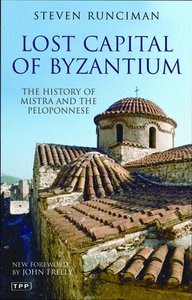
A second problem with Hanegraaff's assertion that Plethon remained "virtually alone in his radical departure from Christianity" is that there is strong evidence for the existence a full-blown Pagan "movement" in and around Mistra, where Plethon spent the last five decades of his life. Steven Runciman in his Lost Capital of Byzantium: The History of Mistra and the Peloponnese writes that "it seems certain that there was a neo-paganist cell at Mistra which he [Plethon] dominated and encouraged." Runciman even goes so far as to suggest the tantalizing possibility that Cardinal Bessarion, who had studied with Plethon in Mistra, "remained faithful in secret to his master's secret [Pagan] teaching," despite the high rank and prestige he attained later in the Catholic Church. [See Chapter IX, and especially p. 102 in the 2009 I.B. Tauris paperback edition]

A third difficulty is that Hanegraaff's characterization in no way excludes (in fact it explicitly accepts) the possibility of a small, determined band of Renaissance Pagans inspired by Plethon. In fact, the stereotypical conception of "Renaissance Pagans" has never been that of a mass movement, but rather of an elite group of philosophers, poets, artists and scientists. So Hanegraaff has not really disproven what he refers to as "the historiographical cliche of a 'Pagan Renaissance'" at all! Rather he has added his voice to all those others who have pointed to Plethon as the logical starting point for assessing the extent to which Paganism was not merely a viable "religious option, at least in theory" (see below) during the Renaissance, but an option that was exercised and put into practice. With the unassailable evidence concerning Plethon in hand, we know that there were more than zero Pagans during the Renaissance, and the evidence is overwhelming that even if the number was relatively small, Plethon was far from being alone. Therefore we can say with complete confidence that both Pagans and Paganism existed during the Renaissance.

But then, having attempted, lamely, to calm our fears for the safety of Renaissance Christendom, Hanegraaff immediately zigs as sharply as he has just zagged:
"Nevertheless, one might say that with Plethon, the pagan cat was out of the box. His case shows that once the textual sources of the Platonic tradition became available to a Christian culture where the need for religious reform was widely felt, paganism became a religious option, at least in theory."
What Hanegraaff says above does far more than completely undermine his previous assurances that there was no Pagan funny-business going on beneath the sheets of the Renaissance. If access to "textual sources" of classical Paganism was sufficient to make Paganism "a religious option" in the 15th century, then Paganism was already an option long before that as well. In fact, it had never not been an option! For Hanegraaff's bizarre implication that such sources only "became available" suddenly, and out of nowhere, in the fifteenth century is complete nonsense, as Hanegraaff himself must be perfectly aware. There was, and obviously so, quite a bit of Pagan religious literature written in Latin, and this Latinate Pagan literature was read and studied continuously during the centuries separating late antiquity from the Renaissance. In fact, Vergil, Ovid, Cicero, Apuleius, and Macrobius were all the equivalent of best-selling authors even during the darkest of the Dark Ages, and their writings provide a thorough course in beginning, intermediate and advanced Paganism.

So here we find yet another case of a scholar protesting overly much, and in precisely the manner that should heighten, rather than allay, suspicion.

Tuesday, March 15, 2011

"Earth's the right place for love" (in memoriam, "dae ja, dae bi")

"There is something gorgeous about destruction, and liberating too.
Unless you're the one being destroyed."
Laurie Anderson, Los Angeles Times, 1994

When I see birches bend to left and right
Across the lines of straighter darker trees,
I like to think some boy's been swinging them.
But swinging doesn't bend them down to stay.
Ice-storms do that. Often you must have seen them
Loaded with ice a sunny winter morning
After a rain. They click upon themselves
As the breeze rises, and turn many-colored
As the stir cracks and crazes their enamel.
Soon the sun's warmth makes them shed crystal shells
Shattering and avalanching on the snow-crust--
Such heaps of broken glass to sweep away
You'd think the inner dome of heaven had fallen.
They are dragged to the withered bracken by the load,
And they seem not to break; though once they are bowed
So low for long, they never right themselves:
You may see their trunks arching in the woods
Years afterwards, trailing their leaves on the ground
Like girls on hands and knees that throw their hair
Before them over their heads to dry in the sun.
But I was going to say when Truth broke in
With all her matter-of-fact about the ice-storm
(Now am I free to be poetical?)
I should prefer to have some boy bend them
As he went out and in to fetch the cows--
Some boy too far from town to learn baseball,
Whose only play was what he found himself,
Summer or winter, and could play alone.
One by one he subdued his father's trees
By riding them down over and over again
Until he took the stiffness out of them,
And not one but hung limp, not one was left
For him to conquer. He learned all there was
To learn about not launching out too soon
And so not carrying the tree away
Clear to the ground. He always kept his poise
To the top branches, climbing carefully
With the same pains you use to fill a cup
Up to the brim, and even above the brim.
Then he flung outward, feet first, with a swish,
Kicking his way down through the air to the ground.
So was I once myself a swinger of birches.
And so I dream of going back to be.
It's when I'm weary of considerations,
And life is too much like a pathless wood
Where your face burns and tickles with the cobwebs
Broken across it, and one eye is weeping
From a twig's having lashed across it open.
I'd like to get away from earth awhile
And then come back to it and begin over.

May no fate willfully misunderstand me

And half grant what I wish and snatch me away

Not to return.
Earth's the right place for love:
I don't know where it's likely to go better.

I'd like to go by climbing a birch tree,
And climb black branches up a snow-white trunk
Toward heaven, till the tree could bear no more,
But dipped its top and set me down again.
That would be good both going and coming back.
One could do worse than be a swinger of birches.

["Birches", by Robert Frost]

Monday, March 14, 2011

"Forsaking Christ to follow Plato" (Or, Was Michael Psellos a Christian?)

Nor earth to me give food, nor heaven light,
Sport and repose lock from me day and night,

To desperation turn my trust and hope,

An anchor's cheer in prison be my scope,
Each opposite, that blanks the face of joy,
Meet what I would have well, and it destroy,
Both here and hence pursue me lasting strife,

If, once a widow, ever I be wife!

[Hamlet, William Shakespeare, Act III, Scene 2]

Almost everyone seems to agree (in fact they doth protest) that Michael Psellos was a Christian. Which is kind of funny, because in 11th Century Byzantium one really didn't have all that much choice in the matter: everyone was a Christian (I mean, they were, right?). But if everyone was a Christian, why is it so important to explicitly declare this in the specific case of Psellos?

An examination of the primary sources indicates a likely explanation: Psellos' own contemporaries questioned his religious orientation to such an extent that one cannot simply pass over his religious identity in silence. Basil Tatakis, in his Byzantine Philosophy, tells us that because of his intense devotion to the philosophy of Plato, Psellos was "accused of 'Hellenizing' -- that is to say, of Pagan tendencies." And in response to these accusations, Psellos "was required to give a profession of faith and justify his admiration for Plato." [p. 135] However, Psellos' accusers were unconvinced, and they continued to be "scandalized by his free use of Hellenic thought and culture." The prevailing negative attitude toward "Hellenic thought and culture" is indicated by the fact that Christian monks at the time "would bless themselves and murmur anathemas against the Hellenic Satan," at the mere mention of the name of Plato! [p. 146] In other words, Psellos, who devoted his life to the revival of Platonic philosophy, was seen by many Byzantine Christians as a prophet of "the Hellenic Satan". Tatakis also provides us with the detail that Psellos' "principle accuser" was the future Patriarch John Xiphilinos.

Here are two typical examples of Tatakis' protesting Psellos' Christianity: "Assuming that supreme perfection is contained within Christian doctrine, Psellos appropriated all manifestations of Greek civilization; i.e., all of those ideas that he claimed anticipated Christianity and directed the mind toward it." [p. 135] "[A]ccording to Psellos ... Greek thought was a preparatory stage, to be perfected by Christianity." [p. 137]

And here are some examples of the same variety of protestation from other scholars:

Jaroslav Pelikan, The Spirit of Eastern Christianity: "The outstanding representative of Christian Hellenism ... was Michael Psellus ... Nevertheless, his Christian Hellenism did not blind him to the 'heresy' inherent in 'ancient Hellenism' or heathenism, which could not be reconciled with the Christian gospel." [pp. 243-244]

Katerina Ierandiokonou, "The Greek Concept of Sympatheia and Its Byzantine Appropriation by Michael Psellos" (in The Occult Sciences in Byzantium): "We should now turn to Psellos' use of the notion of cosmic sympatheia. The challenge for him, as for all Christian thinkers, is how to use this notion in order to understand the world and the relations between its parts without coming into conflict with standard Christian dogma." [p. 106] "That is to say, as a Christian, Psellos cannot accept that the sympatheic relations between th epart of the world are such that human beings may control the powers of daemons for their own benefit" [p. 108]

John Myendorff, Byzantine Theology: "Psellos certainly remained a Christian." [p. 62]

But in addition to the accusations of Hellenizing apostasy made by his Christian contemporaries, Psellos' spiritual allegiance is also called into question by his close association with two other philosophers: John Italos and George Gemistos Plethon. Italos was Psellos' student and his hand-picked successor (as hypatos tõn philosophõn, i.e., Consul of the Philosophers, a title created for Psellos by Emperor Konstantinos IX Monomarchos). Unfortunately for Psellos' reputation as a good Christian, Italos attracted even more negative attention than his teacher had, and he was formally charged with "Hellenizing", put on trial, and convicted on multiple counts of religious deviancy based on his philosophical teachings (which, it must be emphasized, he had learned at the knee of his master, Psellos).

In the case of Plethon we have not a direct student, but rather a philosophical heir born almost three centuries after Psellos' death. Despite the significant separation in time, though, Plethon is inevitably described in terms that tie him closely in spirit to Psellos: "The whole 12th century is replete with dogmatic struggles stimulated by the renaissance of philosophical doctrines. These conflicts allow us to follow the uninterrupted progress of Psellos' work ... until it is finally integrated in the work of Plethon." [Tatakis, p. 171] "[D]uring this entire period Psellos' Neoplatonism wins followers, spreads, develops, and finds its fullest expression with Plethon," [Tatakis, p. 190] "[Plethon] was reviving by implication the heresies of earlier Byzantine Platonists such as Michael Psellos and John Italos .... Like Psellos and Italos, Gemistos gave the primacy to philosophy over theology." [George Gemistos Plethon: Last of the Hellenes, C.M. Woodhouse, p. 167] And Plethon provides an even stronger case of Platonic Paganism, for Italos found it necessary to recant his Hellenizing ideas (not once but twice), while Plethon went to his grave an unrepentant Pagan.

Therefore it is seen as needful to not stop at merely asserting the sincerity of Psellos' profession of Christian belief in itself, but to add additional arguments putting spiritual distance between the ostensibly Christian Psellos and these two wayward Platonists, who are in such dangerously close philosophical proximity to Psellos. For example, Basil Tatakis claims: "Psellos saw pre-Christian thinking as a preparation for Christianity, which in itself constitues absolute truth. Plethon sees Christianity as a decadence of thought and asks of philosophy a starting point from which he can return to the original sources that, according to him contain the the absolute truth." [p. 237] And also: "Plethon's indifference (if not aversion) toward Christianity allows him to use Platonic philosophy freely, without even attempting to reconcile it with the Scriptures. Unlike Psellos, Plethon's aim is not to show that Plato is closer to Christianity than Aristotle, but to show that Plato is closer to the truth." [p. 241]

Similarly, Tatakis is also eager to clear Psellos of any suspicion arising from his closest disciple's Platonic apostasy: "[For Italos], philosophy is neither, as it was for Psellos, merely an exercise of reason nor a preparatory stage for penetrating even further the mysteries of Christian teaching ... Italos risks presenting a system of thought that favors Greek philosophy and reason ... Until the time of Italos we sought philosophical thought within theology." [p. 173]

But the more these scholars protest, the more Psellos' true religious identity is called into question. At least that is what methinks.


Forsaking Christ to Follow Plato (Or, Was Michael Psellos a Christian?)
  • Part One: Mostly Basil Tatakis' Byzantine Philosophy, with a little help from Jaroslav Pelikan, Katerina Ierandiokonou, John Myendorff, and even C.M. Woodhouse (this is the post you are reading right now)
  • Part Two: N.G. Wilson's Scholars of Byzantium
  • Part Three: Anthony Kaldellis' The Argument of Psellos' Chronographia
  • Part Four: Michael Psellos and the Chaldean Oracles

Friday, March 11, 2011

Irish-American Terrorists Threaten Jon Stewart With Execution. (NOT)

Just in case you are struggling to understand the difference between the IRA and Al Qaeda, please consider the two cases of Molly Norris and Jon Stewart.

In the wake of threats by Islamic extremists against Trey Parker and Matt Stone (of South Park fame), American cartoonist Molly Norris proposed (in April of 2010) that people around the world should draw cartoons of Muhammad as both a symbolic protest and to "water down the pool of targets." But less than a week later, Norris very publicly changed her mind, saying she had been "totally unprepared" for the response her idea received. Despite her repeated public apologies, Molly Norris' name was placed on a "hit list" by American Muslim terrorist Anwar al-Awlaki, who said, "The medicine prescribed by the Messenger of Allah is the execution of those involved." And as to anyone who participated in Norris' original idea of "Everybody Draw Muhhamad Day", al-Awaki said, "The large number of participants makes it easier for us because there are more targets to choose from." According to Norris, she was urged by the FBI to take the threats very seriously. In September it was reported that she had changed her name and gone into hiding.


In response to the first day of Congressman Peter King's hearings on the radicalization of American Muslims, Jon Stewart opened his show last night with a 10 minute tirade against the Irish Republican Army, whom he labeled as murderers and terrorists. Stewart made a special point of mocking anyone (including especially Peter King) who would dare to suggest that there is any meaningful difference between the IRA and Al Qaeda. Does anyone in their right mind think that Jon Stewart is in any danger whatsoever for doing this? It must be emphasized that Molly Norris, who was almost completely unknown at the time, merely suggested that people draw cartoons (and then almost immediately withdrew the suggestion and apologized profusely), while Jon Stewart, who is watched by over 2 million people four nights a week (and who was named Most Influential Man of 2010), publicly attacked Irish freedom fighters as savage murderers.

Tuesday, March 8, 2011

"We need to acknowledge that there is a problem."

The following is excerpted from "King's Muslim Hearings Are No Witch Hunt" by American Muslim journalist Asra Q. Nomani, writing for the Daily Beast:
Far from being harassment, Rep. Peter King’s upcoming hearings are a chance for U.S. Muslims to acknowledge the local extremism that has caused some young men to go fight in Somalia, writes Asra Q. Nomani, herself a Muslim.

In recent days, Rep. Peter King has been accused of starting a “witch hunt” by holding hearings, starting this Thursday, called “The Extent of Radicalization in the American Muslim Community and That Community's Response.” As an American Muslim woman who has lived in this country for 42 years, I firmly believe the hearings on Muslim radicalization are not a witch hunt and King is no Joe McCarthy, the senator who led hearings on communism in America. Our worst enemies in America, I would argue, are Muslim interest groups and leaders, who do more to deny the problem than defeat it, thus furthering frustrations with the Muslim community. We need to acknowledge that there is a problem ....

In the years since [9/11], our community has launched obtuse PR campaigns that don’t address issues of radicalism head-on. We live in a culture of denial. Muslim communities, like so many, are largely shame-based societies, and they don’t take easily to admitting their problems. From my vantage point, we have to shake off the fear of shame and own the problems inside our community. In a sense, we need to be shameless. We have to realize that neither our community nor Islam has to be defined by criminals such as Maj. Nidal Hassan and Faisal Shahzad, but they will be if we don’t disavow these men and their ideologies. Muslim communities may have legitimate grievances about U.S. foreign policy, but those grievances, too often, become excuses for avoiding the ugly truths about radicalization in our communities.
Read more about Asra Q. Nomani here:
Walking the lonely road (The Hindu)
Woman-led Friday prayer sparks controversy in the US (Pakistan Times)
Muslim Woman's Prayer Causes Stir (CBSNews.Com)
Woman Leads Muslim Prayer Service in New York (New York Times)

Other stories by Nomani:
New Details About Daniel Pearl's Murder
Christian Mom Faces Execution in Pakistan
What Hogwarts Can Teach Muslims
Let These Women Pray!

Monday, March 7, 2011

Islam should not be singled out.

"Our religion has been hijacked by the extremists"
Daisy Khan, in an interview with Margot Adler of NPR, July 15, 2010

Islam should not be singled out for scrutiny by Peter King or anyone else.

Any ideology, religious or otherwise, that receives funding from totalitarian governments, like those in Iran and Saudi Arabia, should be investigated. For that matter, any ideological group operating in the United States that receives funding from any foreign government deserves scrutiny. In fact, these are known as "foreign agents" and are already supposed to be subject to close scrutiny.

Any group or movement whose headquarters (or "community centers" or whatever one wishes to call them) are known to be used as meeting places for people planning terrorist attacks in the United States should be investigated.

Any place where sympathizers of Al Qaeda gather should be investigated. This also goes for sympathizers of any other terrorist group that openly declares itself at war with the United States and has successfully carried out terrorist attacks in the United States.

Any group, religious or otherwise, whose own adherents loudly proclaim that they have been "hijacked by terrorists" should, obviously, be subject to ongoing investigations. The more we know about all groups that have been "hijacked by terrorists", the better.

For more information, see the report released last month by the Triangle Center on Terrorism and Homeland Security: Muslim American Terrorism Since 9/11: An Accounting. The following table is from that report:

An Inconvenient Pagan: The Story of George Gemistos Plethon

George Gemistos Plethon was an "underground" Pagan, that is, he kept his true religious identity a secret while publicly professing to be a Christian. He lived six centuries ago, and was a central figure in the intellectual and spiritual reawakening of the West known as the Renaissance. Plethon's Paganism is not a matter for speculation, because unambiguously Pagan writings that he kept secret (except to his most intimate friends) became public after his death. Therein Plethon explicitly rejected Christianity and embraced the ancient polytheistic religion of the pre-Christian Hellenes.

Plethon was also one of the most celebrated and influential European intellectuals of his day, indeed, he is arguably a pivotal figure in western intellectual and spiritual history. Despite the fact that he lived in exile (due to his religious views) for the last five decades of his long life, those who directly studied under Plethon, or were inspired by him, defined the Italian Renaissance of the 15th century. Plethon and those most influenced by him have had an immense impact on all of subsequent western intellectual history.

The power of Plethon's impact on his contemporaries is illustrated by the fact that even in death, his disciples were still drawn to him. In the year 1465, Plethon's remains were disinterred by Sigismondo Malatesta (the first person to ever earn the honor of being personally condemned to Hell by the Catholic Church), who then transported these to a Pagan Temple he had erected in the city of Rimini, the ancestral seat of the Malatestas. This building, officially the Cathedral of San Francesco, is described in the Catholic Encyclopedia as "the most pagan of all professedly Christian churches."

Unfortunately, most modern Pagans know very little about Plethon. So I am doing a series of posts that will provide some pointers for those interested in learning more. The remainder of this, the first post in the series "An Inconvenient Pagan", is comprised of four excerpts from Basil Tatakis' Byzantine Philosophy. These excerpts were selected to emphasize the fact that Plethon himself was just the latest in a centuries long lineage of Hellenizing Byzantine Platonists, stretching back to Michael Psellos and John Italos.
1.
"[T]he text of the charges [against John Italos, who was condemned as a Pagan in the year 1082] summarizes a detailed examination of Italos' writings and teachings. He himself, moreover, recognized the accuracy of the summary and confessed his errors. The confession of faith, which he was obliged to give the synod, allows us to understand the extent to which Italos was nourished by Neoplatonism. He speaks of the return of the Son to the Father, and of the uncreated and incomprehensible One, without calling it God, which reminds us of the Plotinian One. It is not just a question of rationalistic excesses in attempting to explain Christian doctrines: Italos goes much further. He does not view literature as merely formative for the intellect; and for him, philosophy is neither, as it was for Psellos, merely an exercise of reason nor a preparatory stage for penetrating even further the mysteries of Christian teaching. Basing his thought on philosophical principles and Neoplatonic teachings, Italos risks presenting a system of thought that favors Greek philosophy and reason. Here we are dealing with the first sketch of a philosophical system. As we can see, Psellos and Italos, though different in spirit, returned to the last representatives of pagan thought so as to give continuity to philosophical life.

"Until the time of Italos, we sought philosophical thought within theology. Italos is the first to give philosophy its autonomy within a purely rationalistic movement of thought, one which seeks clear solutions to questions concerning human destiny and the higher mysteries of Christianity such as the Incarnation and the Holy Trinity. Italos attempts to establish philosophical problems upon a philosophical basis, for the time had come for theology to become dependent upon philosophy, which had now become the depository of truth. He seems to lack any sense of the mystical.

"While Italos was alive, this movement of ideas had great repercussions. The emperor Michael VII himself and his brother Andronikos were in favor of it. Patriarch Eustratios Garidas, who was in charge of the inquisition into Italos's teachings, was won over by these views. A large number of cultured people in Byzantine society welcomed the influence of classical romanticism, which ultimately led to paganism. One of these, Berbilas, went so far as to throw himself into the waters of the Bosphoros crying out: 'Receive me, O Poseidon.' We are encountering here all the symptoms that will appear more clearly and more widespread during the time of the Renaissance. Thus we can easily see why the Orthodox Church responded excessively harshly to Italos' movement, prohibiting not only any borrowing from Hellenism but also the application of any rational procedures to theology. The Church wanted to draw attention once more to the mystical character of religion, a character which transcends human reason."
[pp. 173-174]


2.
"The Russian scholar Thomas Uspenskij was the first to note that Byzantine philosophy asked itself the same cosmological, psychological, and epistemological questions as did the philosophy of the Latin West. There are in effect some striking resemblances: Psellos, Italos, and Abelard agree on many points. On the other hand, the opposition between Realism and Nominalism had been a long-standing question for Byzantium, beginning with Photios. Moreover, as has been said, Michael of Ephesus and Eustratios of Nicea are the two most important Aristotelian teachers at the start of the period that was to bring Aristotle's triumph to the West. But though Aristotle was triumphant in the Middle Ages, the Renaissance was to give Plato the final victory, a victory not only started but essentially prepared for by Byzantium. It should be added that from the 11th century on, the Byzantines were also interested in the political thought of antiquity; the West would not confront this subject for yeat another two centuries. Thus it is not enough to say that in the 11th and 12th centuries speculative thought in the Latin West runs on the same track as it did in Byzantium. We must acknowledge that in all the essential points of this intellectual movement, Byzantium led the way."
[pp. 179-180]


3.
"As far as philosophy is concerned, it must be noted that during this entire period Psellos' Neoplatonism wins followers, spreads, develops, and finds its fullest expression with Plethon ["this entire period" means from the end of the 11th century to the time of Plethon, who died around 1453] . All of this does not come about without resistance, however. The Aristotelianism of Orthodox Scholasticism, which was now also being supported by Western Scholasticism, especially that of Thomas Aquinas, forced this Neoplatonism to contend over certain theological questions. This Neoplatonism seems to be a philosophy struggling to secure its own freedom of the thought and escape from dogmatism."
[p. 190]


4.
"Plethon spent most of his life at Mistra .... In his memoir to the emperor Manuel he maintains with emphasis that "we are Hellenes, and we maintain that Peloponnessus was the ancient source from where sprang the noblest Hellenic tribes, which migrated from there to give birth to the grand history of the Hellenic naiton." This resurrection of the consciousness of Hellenism reflects resistance and reaction to the picture of the empire's sad decline, for it both announces and determines the future of the Greek nation. Plethon wanted to play a preeminent role in this context, and he devoted al of the resources of his spirit toward this end .... His two memoirs leave us with no doubt that Plethon dreamt of playing the role of Athenian philosopher for the Byzantine princes .... He has become acquainted with Plato through Psellos's tradition ... and his attention is increasingly attracted by the syncretic mysticism of the Alexandrians. Plethon thus comes to dream in the middle of the 15th century that he can resuscitate the efforts of Porphyry, Iamblichos, and Proclus, and upon the barrenness of Christian worship he wants to establish a new universal religion .... The position of the enlightenment philosophers would not be very different .... Plethon sees Christianity as decadence of thought and asks of philosophy a starting point from which he can return to the original sources ....

"Plethon's presence at Ferrara and then in Florence during the Synod on the unification of the churches (1432-1439) can taken as one of the most significant episodes in his own life and in the rebirth of Platonic philosophy in the West. Since the end of the 14th century, Manuel Chrysoloras, who is said to have been one of Plethon's students and a professor of Greek, had implanted in the Latins an understanding of the "divine Plato", who knew how to combine beauty with wisdom. Thus Plethon found in Florence a circle of people thirsting to know Plato, who considered him the herald of the independence of spirit and of conscience. Plethon responded to this pressing need as best he could with both his courses and his written work The Differences between Aristotle and Plato, which appears to be a summary of his courses. Under Plethon's influence, Cosimo de Medici proposed the plan for his Platonic Academy, the first institution to represent the intellectual aspirations and concerns of modern times. When one reflects upon the fate of Platonism, first in Florence and then throughout the entire West, and on the depth and extent of its influence, one comes to appreciate more fully the historical importance of the Byzantine Plethon's stay in Florence. Plethon returned to Mistra (1441), where he stayed until his death, keeping up correspondence with his Italian friends and ardently writing his basic work, The Laws, which he left unpublished. In 1459 Marsilio Ficino realized the wish of Cosimo de Medici and founded the Platonic Academy. A year later in Constantinople, Scholarios (renamed Gennadios), Archbishop of Constaninople, incinerated a manuscript of Plethon's The Laws, since he thought it irreverent and anti-Christian. Plethon's admirerers, however, did not share Scholarios's views. In 1475 Sigismundo Malatesta transferred Plethon's remains from Mistra to the small Italian town of Rimini, where he rests today in the church of Saint Francesco."
[pp. 236-238]

Sunday, March 6, 2011

"A Different World"? (Ronald Hutton's Recantations, Part Deux)

1. Introduction
For those just tuning in, this post is part of an ongoing series looking at the concept of "the Old Religion" ("The Old Religion: Getting Beyond the Noise", see links at the bottom for other installments). Behind that concept is the belief that modern Paganism represents the survival of ancient forms of religion that Christians (and Muslims) have been trying to "extirpate" (that is their word for it) for two millennia (although the Muslims have only been in on the fun for a slightly lesser span of time).

In 1999, English historian Ronald Hutton (who also happens to be a Pagan himself who may or may not be a Pagan himself) published a book titled Triumph of the Moon, in which he claimed to have demonstrated that there was no basis whatsoever for the notion of "the Old Religion". But then in 2003 he published another book, Witches, Druids and King Arthur, in which he announced to the world that he had changed his mind. In that book, he devotes two chapters (which, somewhat awkwardly, come sandwiched in the middle, making up the fourth and fifth chapters) to attempting to explain his reversal. The post you are reading right now (and several future posts) will focus on the chapter "Paganism in the Missing Centuries". In a previous post ("The Recantations of Ronald Hutton, Part One") I have already discussed, briefly, the chapter "The New Old Religion".

Once we get to the essay in question ("Paganism in the Missing Centuries"), it is painfully clear that Ronald Hutton is like the proverbial general who is "still fighting the last war" (a war, by the way, that was decisively lost). By this time it has been conceded by Hutton that modern Paganism "closely resembles", has been "certainly influenced" by, and possesses "linear connections" to ancient Paganism. In other words, the question of if ancient Paganism survived into modernity has been resolved in the affirmative, and it is now time to move on to how Paganism survived. But this is something that Ronald Hutton simply cannot bring himself to do in any constructive way.

Having failed in his campaign to prove to the world that modern Paganism is completely lacking in historical connections to ancient Paganism, Hutton turns to petulantly obscuring and misrepresenting these connections, which is all that is left to him since even he can no longer pretend that they simply do not exist. Still, old habits die hard, and so he reverts to framing his discussion, ignoring what he himself has already granted as true, as if it were still an open question whether or not there is anything that, "to any extent", constitutes "a 'survival' of ancient Paganism."

Anyway, here is Hutton in his own words from somewhere near the beginning of "Paganism in the Missing Centuries":
The purpose of this chapter is to trace ...[the subsequent history of] those particular forms of paganism that appeared in the Roman Empire towards the end of the ancient world, and have been noted as bearing most resemblance to the religions of the modern Pagan revival.

Between the early nineteenth and the mid twentieth centuries there was a significant scholarly tradition of belief that an active and organised paganism had survived in Europe throughout the Christian middle ages. It was conceived as having been essentially a resistance movement of the common people, especially in the countryside, and (as seen) was disproved by more thorough research since the 1960s. The present investigation moves through a different world, that of the scholarly elites. Late pagan monotheism, Neoplatonism, theurgy and Graeco-Egyptian ritual magic were all cultural forms that were conveyed by texts and developed by intellectuals. It remains to be asked now what was made of them during the succeeding thousand years, by people operating within societies restructured by the new monotheistic faiths of Christianity and Islam. In the process, it may be possible to answer the larger question of whether they provided any continuity of traditions during this long period that opposed, challenged or compromised the norms of the dominant religions. Did they, to any extent, represent a 'survival' of ancient paganism?
[pp. 137-138]
In this post the focus will be on one specific issue raised in the excerpt above: Hutton's claim that medieval "scholarly elites" (who studied and practiced Astrology, Alchemy, Kabbalah, Hermeticism, etc) inhabited and constituted "a different world", religiously speaking, completely separate from "the common people".

This "different world" paradigm is a direct extension of Hutton's grotesque mischaracterization of late antique Pagans (or at least those who most stubbornly resisted conversion to Christianity and who are the most closely related to modern Pagans) as a "private and avant-garde" clique that was "very much the preserve of a self-conscious intellectual elite, detached from the masses." Hutton wishes to portray the "golden thread", as it is often called, of those who kept the ancient Mysteries alive throughout the persecutions of the Middle Ages, as an isolated "elite", hermetically, if you will, sealed off from any connection with "the masses", that is, disconnected from from the vast bulk of their fellow human beings. In other words, Hutton wishes to portray this vital connection between modern and ancient Paganism as nothing more than a quirky, affected hobby furtively pursued by isolated, anti-social and well-heeled antiquarians and aficionados, rather than as a living spiritual tradition of "the people". This characterization plays a central role in Hutton's schizophrenic narrative of how Paganism didn't really survive, even though it actually did.

Is there any basis for this narrative positing an unbridgeable chasm between "elites" and "the masses"? Lets take a closer look.

2. On the arbitrary sociological compartmentalization of ancient Paganism
Patricius Aurelius was a Roman citizen in the North African town of Thagaste during the fourth century AD. According to historian Peter Brown, Patricius "was a poor man, a tenuis municeps, a burgess of slender means," and his son, Augustine, grew up "in a hard competitive world, among proud and impoverished gentlefolk." Fortunately, there was a way up and out: "A classical education was one of the only passports to success for such men ... His early life will be overshadowed by the sacrifices his father made to give him this vital education." In fact, even once Augustine's father had been able to send his son to be educated in the "university town" of Madaura, this education had to be interrupted "for one disastrous year", during which time Patricius was unable to send Augustine any money, and the young man had to scrape by on his own. But it all paid off. By the age of 31, Augustine was a professor of rhetoric and had gained acceptance, and a growing admiration, in all the right circles. Sixteen centuries later he is known to the world as "Augustine of Hippo", or simply "Saint Augustine." (See Brown's excellent biography Augustine of Hippo, especially pages 7-10, for the basic outlines of Augustine's early life.)

Augustine lived at a time when Christianity was the official religion of the Roman state, the largest and most powerful political entity on planet earth at the time. In the early centuries of its existence, however, Christianity had lurked tenuously at the margins of Roman society, and Christians who were well educated, or even poorly educated, were extremely rare exceptions. What evidence there is tells us that Christianity in the centuries prior to Constantine only slowly evolved from being completely unknown by those who could read and write, to being silently ignored, to being silently shunned to, finally, being openly acknowledged by way of mockery and ridicule. Over the same period, a small number of Christian intellectuals slowly developed an "apologetic" literature of their own, which consisted largely of variations on the theme of requests to be taken seriously. And to be taken seriously in Roman society required being able to express oneself in the language of rhetoric, philosophy and classical literature.

But those Christian elites who engaged in early apologetics did not speak on behalf of some separate Christianity walled off from the unwashed, ignorant, superstitious masses who made up the vast bulk of the faithful. Although they attempted to express the beliefs and practices of Christianity in a language completely incomprehensible to nearly all of their fellow Christians, nevertheless we do not speak as if there were two completely different Christianities inhabiting two "different worlds."

And yet it is quite common to find the religiosity of Pagan intellectuals being characterized as not only utterly separate from, but actively opposed to the "traditional" religious beliefs and practices of their fellow Pagans, the majority of whom (even among the rich, the powerful and the educated) either had little interest in philosophy and "high" literature, or were even openly hostile toward them.

The fact is that if one bothers to look at what, for examples, Socrates, Plato, Aristotle, the Stoics, the so-called "Middle" Platonists, and the mislabled "neo-" Platonists, had to say on religious subjects, one finds that they all, far from attacking traditional Pagan religion, were engaged in something very much like the same kind of "apologetic" enterprise that occupied Irenaeus, Lactantius, and so forth.

Not only did the great Pagan philosophers and writers explicate and defend traditional religion, they also practiced it (just as Christian philosophers both "apologized" for and practiced the same religion as their fellow Christians). For there were not separate temples dedicated to Gods and Goddesses only worshipped by "the elites". Nor were there separate festivals and holidays, one set for the elites, the other for the commoners. In fact, Pagan cults tended to cut across, and even to obliterate, such social divisions.

Christians have tried to have it both ways. Ancient Pagan intellectuals, they insist, couldn't possibly, I mean not really, I mean how could they, believe in all that nonsense about Gods and Goddesses and so forth! I mean look at those silly myths! Look at those ridiculous superstitions! Philosophers and other smart Pagans might have gone through the motions, just to get along, but they obviously did not believe any that nonsense. But naturally these same Christians see no difficulty in highly educated and highly intelligent people, such as Augustine, Aquinas, and so forth, believing in all the obscene bullshit that one finds in the Old and New Testaments, not to mention the demented teachings of the Church that surpass even what is found in their "scriptures"! Here we have two interlocking circular arguments. The coupled premises are that Paganism is patently irrational and Christianity is perfectly reasonable, therefore intelligent people can't really believe in Paganism, whereas they can, indeed should, believe in Christianity.

An early example of this standard Christian trope is to be found in the writings of Augustine himself, who, in Book VIII of his Against the Pagans, posits a threefold division of Pagan theology: (1) the "fabulous" theology of Pagan myths, "which displays the crimes of the Gods", (2) "the civil, that is, urban theology" of the official cults of a given polis, which "manifests the criminal desires of the Gods", and (3) "natural theology", of which Augustine asserts, "it is not with ordinary men, but with philosophers that we must confer concerning the theology which they call natural."

3. Was late antique Paganism "detached from the masses" and "very much the preserve of a self-conscious intellectual elite"?
Here is how Garth Fowden talks about the social milieu of late antique Hermeticism (from his The Egyptian Hermes: A Historical Approach to the Late Pagan Mind):
"It is time, at long last, to take up Casaubon's cue, and ask who were the men and women who hid behind the name of Hermes Trismegitus, and how their search for God was articulated in everyday experience. Not, it must be said from the outset, that there can be any easy or even very specific answers, when they have to be sought for the most part between the lines of philosophical texts. Even as an approach to the late pagan mind, our search will have its limitations. Hermetism was only one of a number of non-elite currents of thought which drew on Greek philosophy; and anyway it is easy to over-estimate how non-elite it was .... Even so, my conclusions touch on broader areas of society than did those which emerged from my earlier investigations of the circles of Plotinus and his successors .... [M]y treatment of the movement's historical milieu represents, I hope, a useful step forward in the wider sociological analysis of late paganism - a subject whose neglect is now slowly being overcome." [p. xxiv]
And here is Fowden's description of how the ancient God Thoth gradually transformed into the Egyptian Hermes:
"... [T]o understand the genesis of the Egyptian Hermes is to take a first step into the historical milieu of the Hermetica. Thoth was among the most diverse and popular of all the Egyptian Gods. Like many of his colleagues he was an accumulation, rather than a figure cast whole and unambiguously defined; he was a powerful national God who yet had certain specialties and local associations .... He presided over almost every aspect of the temple cults, law and the civil year, and in particular over the sacred rituals, texts and formulae, and the magic arts that were so closely related .... [H]e came to be regarded as the lord of knowledge, language and all science - as Understanding or Reason personified .... Esoteric wisdom was his special preserve, and he was called 'the Mysterious', 'the Unknown'. His magical powers made him a doctor too .... Perhaps, though, it was to his role as guide of souls and judge of the dead that Thoth most owed his popularity with ordinary people. And he continued to inspire strong popular devotion throughout the Ptolemaic and Roman periods. His was an inseparable presence. And it is easy to see why foreign settlers in Egypt were tempted to try to establish some sort of link with him .... [T]he Greek settlers identified Thoth with their God Hermes. Like Thoth, the classical Greek Hermes was associated with the moon, medicine and the realm of the dead. Furthermore, both had a reputation for inventiveness and trickery, and both functioned as messengers of the Gods, which in Hermes's case prepared him as well for his characteristic function in the Hellenistic period, as the logos or 'word', the interpreter of the divine will to mankind. Hermes Trismegistus, then, was the cosmopolitan, Hellenistic Hermes, Egyptianized through his assimilation to Thoth, and in fact known throughout the Roman world as 'the Egyptian' par excellence ... a divinity who could deservedly could be place among the dei magni of the pagan pantheon that presided over the Roman world."
[pp. 22-24]
Toward the end of Fowden's book he engages in a prolonged comparison of Hermeticism with three other, related, late antique religious currents: Platonism, Gnosticism, and Manichaeism (pp. 186-195). It is important to note that Fowden characterizes all three of those movements as "intellectual and elitist," even though one, Manichaeism, was an extremely successful religious movement that persisted for centuries and spread through much of Asia. The Gnostics, too, managed to attain something like the size and status of a mass movement that, at least for a while, was able to run with the big dogs alongside the major Christian sects. Therefore, at least in the hands of a social scientist who knows what he is talking about, "elite" explicitly does not mean "detached from the masses" in the way that Hutton loutishly insists. As for late antique Hermeticists, they were, according to Fowden, "literate but not (usually) learned .... [and] most late antique Platonists would, one suspects, have regarded the Hermetists as socially and culturally homespun." [p. 193]

Two of the late antique religious movements discussed above, Hermeticism and Platonism, are separated "by less of a gap than has often been assumed." [p. 134] That any clear bright line separated the two at all seems unlikely considering the fact that Iamblichus not only placed great emphasis on the Egyptian component of Theurgy, but he "specifically claims to have found the theurgical liberation of the soul from the bonds of fate described in Hermetic books." [p. 134] Several pages later Fowden concedes that "Scholars have not found it easy to make sense of" the relationship between Platonic Theurgy and the Hermetic movement. [p. 138] A little later on he makes it clear that there are grounds for speaking of "theurgical Hermetica". [p.141]

Hutton's conception of an effete "late antique avant-garde" that was "detached from the masses" is clearly derivative of GW Bowersock's "analysis" of the Emperor Julian. Bowersock had claimed, in his Julian the Apostate (first published in 1978), that his fellow Pagans were actually quite hostile to Julian's Platonic Paganism, to the extent that Bowersock (who clearly despises Julian and Paganism generally, without possessing even the slightest understanding of either) epitomizes the death of Julian with these words: "The fanatic was gone, and there were few to regret him." [pp.118-119]

Rowland Smith's far more detailed and thoughtful treatment of Julian's spirituality, Julian's Gods: Religion and Philosophy in the Thought and Action of Julian the Apostate (1995), paints a quite different picture. Smith points out, among other things, that Julian's Paganism was not at all limited to Theurgy, and that Julian's philosophic leanings did not "put him hopelessly at odds with his subjects." [pp. 47-48] Overall, Smith's view is that Julian's Paganism was conventional when it came to matters of piety, cult and tradition, and that the much of Julian's philosophical interest was motivated by a desire to defend traditional polytheistic Paganism from the predations of "the creed making fishermen". [See, in particular, Smith's disussion of Julian's Against the Galileans.]

4. Was Marsilio Ficino a member of the "elite"?
When Marsilio Ficino was still a boy he fell in love ... with philosophy. For a time it was possible to indulge this youthful infatuation, but eventually it was necessary, due to "dire financial straits" (quotes are from Giovanni Corsi's biography of Marsilio Ficino, written in 1506, seven years after its subject's death) for more practical considerations to take precedence: it was time for him to learn some useful trade in order to earn a living. Marsilio's father was a physician, and it was decided that the boy should put away his philosophy books and study medicine, which he reluctantly did.

Fortunately, though, Marsilio's father was a very successful physician; successful enough, in fact, to be in the employ of the wealthy and powerful Medici family. Even more fortunately, Cosimo de' Medici not only had a great love of philosophy, but also felt a passionate calling to support and propagate philosophy, and, even better, had the means to act on that noble aspiration. So when Cosimo discovered that his personal physician's son had both a great aptitude and a burning desire for the study of philosophy, but that the father had felt compelled, because of economic considerations, to have the boy study medicine, the employer instructed his employee "to take especial care over Marsilio's studies so that he should not go against his natural disposition." Naturally, Cosimo added that money should be no object, and offered to personally "supply everything most generously." Thus was set not only the course of one man's life, but the course of all that has been praiseworthy in the subsequent intellectual and spiritual history of the West.

Was Marsilio Ficino one of the "elite"? Those who must earn a living by selling their own labor power in exchange for money (as opposed to living off inherited wealth, which is the hallmark of true hereditary aristocrats) are members of no social elite anywhere, except perhaps in some non-existent Marxist Workers' Paradise. And access to education was no sign of "elitism" in Renaissance Florence, where half or more of all children received education, to the extent that not only the entire business class, but most of the artisans and craftsmen in their employ, were literate. In a word, Marsilio Ficino was solidly middle class. But Ficino was far better off than Heinrich Cornelius Agrippa, who never enjoyed the secure benefits of long-term, stable employment, and who was forced by both economic hardships and ideological persecution to remain on the move throughout his life. Giordano Bruno, whose father was a soldier, faced similar difficulties (and ultimately far worse) as those that beset Agrippa. Then there is the case of Eliphas Levi, born 210 years after the death of Bruno, who lived out his life in grinding poverty, when he wasn't in prison due to his religious ideas. These are some of the most important representatives of the "elite" of which Hutton speaks. (It is true, though, that some links in the "golden chain" were more fortunate in their choice of parents, such as Pico della Mirandola, who father was a Lord and a Count, and whose mother was the daughter of a Count.)

5. "A Europen-wide system of popular beliefs"
In her study, Witchcraft and the Inquisition in Venice, 1550-1650, Ruth Martin raises the question of "how the 'popular' aspects of witchcraft were influenced by the 'learned' during this period (and vice versa)." Her opinion is that "[t]here is clear evidence of a great deal of interpenetration of 'popular' and 'learned' beliefs throughout this period ... but the actual mingling of these two strands, if they ever were entirely separate, seems to have taken place earlier [that is, prior to 1550] ...." [p. 225]
"Until more work is done on Venetian social history as a whole it will be hard to draw ... conclusions .... Even so, it seems that witchcraft of one type or another held an interest for people from all levels of society .... Womens' social standing ranged from the gentildonne who would often consult witches or even try the experiments themselves, through wives of retailers and craftsmen, to washerwomen, arsenal workers (making sails or ropes), the wives of boatmen, prostitutes, to some with no visible means of income at all. Witchcraft had in fact become the main craft of many, hence their titles: la Pirotta, la Caballada, l'Astrologo and la medegha."
[p. 234]
"There was also a close degree of contact between the different classes of Venetian society. The rich and poor lived side by side and the flow of ideas and beliefs between them must have been considerable. As we have seen, the distinction between the 'learned' and the 'popular' elements of witchcraft beliefs in Venice was not always easy to define. This distinction has perhaps been overemphasized in the past in any case. Christina Larner's recent work on Scottish witchcraft, for instance, has revealed a considerable degree of interpenetration between the so-called learned and popular beliefs. In Venice this sharing of beliefs by popular and learned elements of society was even closer."
[p. 243]
"It is clear that Venetian witchcraft was by no means unique. Each category of witchcraft in Venice ... paralleled what is known to have existed elsewhere in Europe during the period and, no doubt, outside this period as well ....

"Necromancy, or the practice of the learned tradition of magic, was current throughout a great part of Europe, and certainly throughout Italy during this period. Some records still survive for the Holy Office of the Roman Inquisition which contain copies of certain processi, usually just the sentence and/or abjuration, which were forwarded to Rome from all over Italy. Necromantic exploits feature prominently in these records. The sentence of the 1580 Vicentine trial against Antonio de Franci, for instance, refers to the work of Pietro d'Abbano and to the Clavicula Salomonis being used used in the celebration of a mass as part of a love magic ceremony. There is little doubt that these and other books of magic like them circulated widely in Europe during this period as did the corrupted versions of traditions evident in many of the conjurations and divinatory experiments seen in Venice.

"At a different level of society other forms of witchcraft also were all part of what was presumably a Europen-wide system of popular beliefs. Mary O'Neil describes the same experiments, with some local modifications, being practiced in Modena. The Udine records, and those in Trinity College, Dublin, covering the whole of Italy contain references to similar practices. Indeed, whenever the available records provide us with a glimpse into traditional beliefs and activities, for instance those of the so-called 'cunning folk' in England, we see time and time again what were basically the same types of witchcraft as those observed in Venice.

"England is indeed the one country outside Italy to display the most obvious similarities with Venice as far as witchcraft practices are concerned .... [T]he nature of the records in each area enables us to see beyond the large trails, the epidemics of witch-hunting, to the day-to-day beliefs and attitudes of the population as a whole .... The Venetian records provide us ... with a detailed picture of a way of life ... [W]hat Venice shows us was, broadly speaking, the picture throughout most of Europe."
[pp. 239-241]


The Old Religion: Getting Beyond the Noise
  1. Part One: Two Myths
  2. Part Two: "A very specific historical claim"
  3. Part Three: The Recantations of Ronald Hutton
  4. Part Four: "A Different World" (Recantations, Part Deux)
  5. Part Five: More on "A Different World" (Recantations, Part Trois)
  6. Part Six: Huttonian Triumphalism (Recantations, Part Quatre)
  7. Part Seven: The Recantations of Ronald Hutton, The Final Episode [parts 5, 6 & 7 are not done yet]
  8. Part Eight: 21st Century Pagans on the Old Religion
  9. Part Nine: Coeval With Time [part 9 is still to come]