Thursday, September 23, 2010

Ayodhya verdict deferred for at least one week

The much anticipated verdict in the "Ayodhya case" before the Indian Supreme Court has been deferred. Here is the story according to ANP and AFP (Algemeen Nederlands Persbureau & Agence France-Presse) from the Radio Netherlands Worldwide website:
Indian Supreme Court defers flashpoint court ruling
Published on 23 September 2010 - 11:36am

India's Supreme Court deferred Thursday a high court ruling on a bitter religious dispute that had posed a major security headache ahead of the crisis-hit Commonwealth Games in New Delhi.

The high court in Allahabad in the northern state of Uttar Pradesh had been due to rule Friday on a long-standing ownership struggle over a religious site in Ayodhya, where Hindu zealots destroyed a mosque in 1992.

But the verdict was postponed for at least a week after the Supreme Court said it would hear a private petition requesting more time for mediation.

"The Supreme Court has deferred the Ayodhya verdict. The order states that the high court in Allahabad cannot pass the judgement tomorrow," said an official in the registrar office.

The next hearing on the petition was set for September 28.

"We will try and tell the court the matter should be deferred further and that parties involved in the dispute -- the religious leaders -- should be asked to sit and solve the matter amicably," said Mukul Rohatgi, a lawyer for the petitioner.

"This issue is not about 10 or 100 people. It involves millions of people and there should be representation from all the concerned parties," Rohatgi said.

The razing of the Babri mosque in 1992 triggered some of the worst communal violence since the partition of the Indian sub-continent in 1947.

More than 2,000 people, mostly Muslims, were killed in the rioting.

Since then, the 47-acre (19-hectare) site has been cordoned off with barbed wire and steel fencing and guarded by troops.

Hindus say the mosque had been built by the Moghul emperor Babur on the site of a temple marking the birthplace of the Hindu warrior God Ram.

There had been deep concerns that Friday's scheduled high court ruling could spark widespread unrest, and 200,000 police, paramilitary and other security personnel had been deployed across Uttar Pradesh as a preventative measure.

The petition before the Supreme Court had argued that the Allahabad verdict posed a particular security risk at a time when India's security concerns are focused on the October 3-14 Commonwealth Games being held in New Delhi.

Fears for the safety of athletes and spectators were heightened after a home-grown Islamist group shot at a tourist bus outside New Delhi's main mosque last Sunday, injuring two Taiwanese nationals.

The Supreme Court decision was greeted with dismay by some involved in the Ayodhya dispute who argued that the time for mediation was over.

"It's really unfortunate. People were waiting for the verdict," said S.Q.R. Ilyas, convenor of a committee representing Muslim interests in the dispute.

"All efforts at reaching an amicable solution have been made without result," he said. "The court verdict... is the need of the hour."

The drive to build a Ram temple on the ruins of the razed mosque remains a key political aim of the Hindu nationalist Bharatiya Janata Party (BJP), which first came to national prominence over the Ayodhya issue.

BJP spokesman Ravi Shankar Prasad, who was appearing as a senior counsel arguing against the petition in the Supreme Court, said he was disappointed.

"I respect the court decision, but I can tell you that there is no possibility of an amicable solution," Prasad said.

Despite appeals for calm from all sides, there are serious concerns about a violent, knee-jerk reaction once the Allahabad High Court eventually delivers its ruling.

"The way the country handles this -- the aftermath -- will have a profound impact on the evolution of our country," Prime Minister Manmohan Singh said earlier in the month.

India has avoided any major outbreak of Hindu-Muslim violence since riots in Gujarat in 2002 and is especially keen to keep a lid on any unrest during the Commonwealth Games.

The Games are already in chaos, with some national delegations threatening to withdraw their teams amid complaints over the "filthy" athletes village and safety concerns after a footbridge leading to one of the main venues collapsed on Tuesday.
© ANP/AFP


For background on Ayodhya please refer to the following links:

Wednesday, September 22, 2010

"I, too, am from a non-Western country."

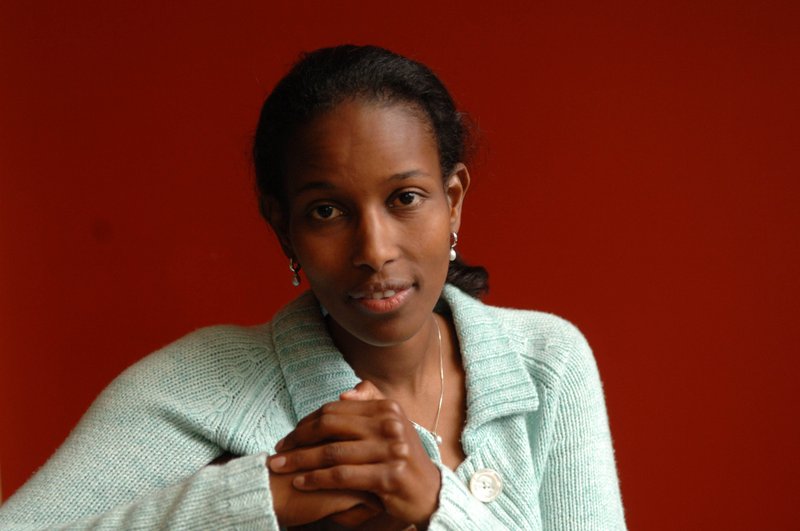
Ayaan Hirsi Ali addressed the national gathering of the Danish People's Party on September 18th. In her speech, Ali, who is Somalian, challenged the DPP's position of calling for a complete stop to all immigration from all non-western countries, although she shares the broader goal of halting and reversing the process of Islamization in the West. A complete video of her speech can be found at Vlad Tepes' blog here.

Some on the Left and in the mainstream media have tried to sieze on Ali's remarks, but what they fail to realize is that she is playing a vital role in moving forward the practical and necessary discussion of both the principles and the realpolitik of actually stopping Islamization -- as opposed to the vague generalities and short-sighted oversimplifications that might serve well to get votes and sell books, but which either do not translate into real policies, or, worse, are used to justify regressive, xenophobic policies.

The bottom line is that Islam must be opposed in the name of defending freedom, not in the name of defending the purity of the White Christian West (a fantasy which does not even exist anyway, and wouldn't be worth defending if it did). People who don't like dark-skinned foreigners who don't worship Jebus are just as much of a threat to freedom as are Islamist terrorists and their taqiyya spewing "moderate" accomplices.

Here is how the Copenhagen Post covered Ali's speech:
Hirsi Ali takes on right-wing party
Monday, 20 September 2010 14:32

Danish People’s Party’s annual congress saw prominent Somali rebuking their policies

Ayaan Hirsi Ali, a 40-year-old former refugee and a prominent critic of religious extremism, addressed the 15th annual party congress of the Danish People’s Party (DF) on Saturday.

She spoke about the importance of integrating non-Western immigrants in Europe and teaching boys about women's rights and sexual morality in the West from an early age.

After building up the party faithful by suggesting that immigrants should enter into a contract to respect the conditions in Danish society, Ali stoked the fire further by saying in English: ‘I do not understand Danish, but I've heard rumours that your party will stop all immigration from non-western countries?’
After meeting applause again from the crowd, Ali turned on them with the rebuke, ‘I too am from a non-Western country,’ and that ‘it is wrong to say that all non-Westerners can’t be integrated into Denmark’.

The response that time was considerably less enthusiastic, but nevertheless party leader Pia Kjærsgaard remained supportive of Ali. As Kjærsgaard said to her: ‘You are many people’s idol, and you are my idol.’

DF has a tradition of inviting controversial guest speakers. In 2008, it was addressed by Mohammed cartoonist Kurt Westergaard.

Like Westergaard, Ali lives under a constant threat to her life and required a heavy security presence at the meeting. Ali has lived with death threats since composing the screenplay for the 2005 Theo van Gogh film Submission,

In 2005, she was named by Time magazine as one of the 100 most influential people in the world. She now works for the conservative think tank American Enterprise Institute in Washington, DC.
[Hat tip to the Islam In Europe blog.]


Tuesday, September 21, 2010

In Praise of Teen Witches

The year was 1973. I was a high school student in a small, very conservative factory town in central Indiana.

There were these two girls in our school. People said they were "witches". This wasn't one of the usual, boringly predictable (while at the same time always crude and salacious) rumors that were routinely spread around, seemingly at random. In fact, this rumor was very persistent and very specific -- completely unrandom. And these were the only two people I had ever heard of being literally accused of "witchcraft" in my whole life.

I knew both of them, but only slightly. Certainly not well enough to just haul off and ask, hey, like what is the deal with the rumor that you're, like, "witches"?

But then I started dating a close friend of one of the "witches". So I asked her about her friend: "hey, like, what's the deal with everyone saying she's, like, a witch?"

Now let me emphasize the time and place again. Time: almost 40 years ago. Not even a full 20 years after Gerald Gardner first published Witchcraft Today. And the place? This was the kind of town that gave the world Dan Quayle. The kind of place where someone like Christine O'Donnell floats to the top, instead of the bottom. The kind of place where public school officials exerted significant effort to thwart the attempts of the Supreme Court to enforce the Constitutional separation of Church and State.

OK, now that I've set the stage, here is what my girlfriend told me when I asked why people said that her friend was a witch: "Oh, you shouldn't say that. They don't use that word. They call it the Old Religion -- but they really don't like to talk about it. Basically it's the religion that the Celts had before the Christians came. It's like, well, Paganism, you know? Nature worship. But really, they really don't like to talk about it, and I shouldn't say anything else. Really -- don't ask her about it or tell anyone what I said."

The little hairs on the back of my neck stood up when I heard the phrase "Old Religion". But that was all I could find out from my girlfriend. I did try to find out more about "the Celts" in the local library -- but none of the books I found said anything about what kind of religion anyone had "before the Christians came."

It would be another 15 years before I happened upon Starhawk's book The Spiral Dance in a B Dalton's bookstore at a mall in Indianapolis (by then I had moved to The Big City). Aha! I thought, this is what she was talking about!

No giggling about "Satanic altars". No dabbling. Just some young people practicing the Old Religion -- and who didn't want anything from anyone else except to be left alone to worship nature in peace. I am getting sick of all the pointless babble about Christine O'Donnell. So I just wanted to tell this little true story about two brave (and very real) teen witches who made a real difference in my life. They let me know that the Old Religion was still alive. And that is some very powerful magic.

"What can the American Muslim community do to protect Molly Norris?" Apparently, nothing.

UPDATED! There is an important update to this post at the bottom.

Sheila Musaji is the founding editor of The American Muslim, a website "dedicated to the promotion of peace, justice, and reconciliation for all humanity." Yesterday she posted a long article titled, "What can the American Muslim community do to protect Molly Norris?" (It's over 3,000 words, and if it were printed out in a 12 point font it would be seven pages long.)

Much of the article consists of Musaji belittling and mocking Ms. Norris, and generally saying that she brought this on herself and that Muslims ("real" Mulims, that is) bear no responsibility whatsoever for her predicament.

My favorite part is when Musaji actually says of Norris:
How she could have been unaware that such a proposal could bring out the extremist element on both sides who would use the event to pursue their own agendas (having nothing to do with free speech) is difficult to understand.
What an incredibly revealing declaration. Musaji comes right out and admits -- no, she in essence proudly asserts -- that Muslims can be counted on to react with bloodthirsty savagery to cartoons! And anyone who doesn't understand that this is just how Muslims roll, well, they'll find out soon enough.

But the title of Musaji's long-winded diatribe said something about protecting Molly Norris, not ridiculing her, didn't it? Hmmm. Well, if we read through the first 2,350 words or so, we finally get to this:
If it was in my power to personally protect Ms. Norris, I would do so. If it was in my power to find and arrest Al-Awlaki, or any other person instigating or attempting to carry out violence against another, I would do so. I wish that I knew what more I could do other than condemn such words and actions.
But I thought that "moderate" Muslims like Musaji were fighting tooth and nail to defeat the extremists!? But according to Musaji they have already given up -- and it really isn't their problem anyway.

Anyone who wants to know how "moderate" Muslims really think should seriously study Sheila Musaji's very enlightening article.

UPDATE: I just noticed that Sheila Musaji maintains a very long list of "Actions" that people can take so that they can "make a difference." There are well over 200 separate "Actions" that people are called on to participate in, mostly consisting of signing petitions, writing letters and "urging" various politicians to do various things. Some of the noble causes highlighted there include the "Leave No Gaza Student Left Behind" petition, five separate action items condemning Israel over the Mavi Marmara incident, a petition "to demand that Republican leaders stop turning a blind eye to violence and hate before it gets out of control and someone gets hurt," and so forth. Nowhere is Molly Norris' case mentioned in any of these ways for people to "make a difference"!

[The cartoon was found at the skeptically.org website here.]

Monday, September 20, 2010

What Does the Muslim Brotherhood think of the new Pew report?

The Muslim Brotherhood has its own official English language website. Who knew? I only discovered this because I had taken notice of the dearth of media coverage on the newly released Pew report on "Muslim networks" in Western Europe (see my previous post on the report for a brief overview and links to Pew's website where you can read more and even download the full report).

It was while searching through what very little media coverage there is on the Pew report that I came across an article titled "New Pew Forum Report offers an In-Depth Profile of Muslim Networks and Movements in Western Europe," at a website called IkhanWeb. At first I did not notice that IkhanWeb is "The Muslim Brotherhood official English web site."

Overall it appears that the Muslim Brotherhood is quite pleased with the new report, in which they are featured prominently. Pew, it should be emphasized, is hardly a bunch of liberal kumbayaist Obama-boosting Islamophilic Ground Zero Mosque supporters. In fact, the director of their "Forum on Religion and Public Life", under whose aegis the report was done, is a conservative Christian named Luis Lugo whose last job prior to coming to Pew was at the Center for Public Justice, a group committed to government subsidies for Christian missionary work (via "faith based initiatives"), and combatting the evils of non-procreative sex. (Officially, of course, all the folks at Pew are as objective as the driven snow. For more on Pew and Lugo, look here).

But now, let's allow the Muslim Brotherhood speak for themselves:
New Pew Forum Report offers an In-Depth Profile of Muslim Networks and Movements in Western Europe
The Pew Forum on Religion and Public Life has released a new report on "Muslim Networks and Movements in Western Europe," profiling several of the oldest, largest and most influential Muslim groups

The Pew Forum on Religion and Public Life has released a new report on "Muslim Networks and Movements in Western Europe," profiling several of the oldest, largest and most influential Muslim groups operating in Western Europe today. A close look is taken at the distinct histories, missions and executive frameworks of these groups including the Gulen Movement; the Muslim Brotherhood and Jama'at-i Islami; the Muslim World League and World Assembly of Muslim Youth; Jihadi Networks and Hizb ut-Tahrir; Sufi Orders; and Tablighi Jama'at.

Focusing on transitional networks and movements whose origins lie in the Muslim world but currently have a significant existence the report discusses the influence on daily lives of Muslims living there;

“Many of the younger leaders are pressing for an agenda that focuses on the interests and needs of Muslims in particular European countries rather than on global Islamic causes, such as the Israeli-Palestinian dispute”.

It highlighted that several Islamic groups with foreign roots had changed their focus to European issues because of pressure from younger European-born Muslims with fewer links to the Muslim majority countries their families emigrated from.

The report examines how European governments cooperate with the groups and the growing connections between Islamic groups and European governments, and the integration of some of these groups into the continent's political mainstream concluding that;

“These Muslim groups and movements have become more visible on the European political stage and have not led to a decrease in activism on the part of these groups”.

Other examinations include the possible future challenges these networks face considering shifts in leadership and membership ranks. According to the report;

“Many Muslims in Western Europe participate in the activities of these movements and networks, and the groups' formal membership rolls appear to be relatively small”.

It continues however that;

“Despite the low levels of formal membership, these groups often exert significant influence by setting agendas and shaping debates within Muslim communities in Western Europe. The growing connections between Islamic groups and European governments, as well as the integration of some of these groups into the continent's political mainstream, have not led to a decrease in activism on the part of these groups. If anything, Muslim groups and movements have become more visible on the European political stage."

The report also indicates there is a significant presence in Western Europe and North America.

The report sums up that in short it is difficult to generalize about Muslim groups in Western Europe because they vary so widely in their philosophies and purposes.

Sunday, September 19, 2010

Blasphemous Images

There are a variety of Christian groups and individuals in the West that are as hell-bent as ever on censoring anything that "offends" them, and punishing those responsible.

For example, here is an outraged call to action for protests against "Chocolate Jesus", a piece by Canadian artist Cosimo Cavallaro. Another example is the now infamous "Merry Titmas" exhibit by "notorious art curator" Lenora Claire in 2007.

Below are some not quite randomly selected images that could, potentially, be seen as examples of anti-Christian blasphemy. (Including one from Claire's "Merry Titmas" show):

The cover of a relatively recent book on Republicanism and Anticlerical Nationalism in Spain, by Enrique Sanabria:


Some naughty nuns by Clovis Trouille:


.
.


Max Ernst's "Virigin Spanking the Christ Child":


Jesus Guinness & Jesus Thong:


The Virgin Mary depicted as a Hooter's waitress:


"Motivational Poster" styled blasphemy:


Racing Nuns action figures:


Sexy Jesus t-shirts from zazzle:


Sexy Nun stickers from zazzle:


Lookin' Good for Jesus products by Blue Q:


Objectified Jebus:


Jesus Elvis:


Jesus Christ On A Bicycle:


even more blasphemy at
e g r e g o r e s:

Saturday, September 18, 2010

"Islamism" widespread, deeply rooted among Muslims in Europe, according to Pew study

Surprise! In a newly published report, researchers from the Pew Religion Forum show that groups committed to "political Islam" are extremely influential among Muslims in Europe. The report goes so far as to say that "The Muslim Brotherhood and its affiliates often succeed in setting the public agenda for European Muslims." [p. 26]

In addition to the Muslim Brotherhood, which is most influential among Arab Muslims in Europe, the report also highlights the Pakistan-based Islamist group, Jama'at-i Islami, which is predominant among Muslims from Pakistan, India, Bangladesh and other parts of South Asia. Jama'at-i Islami is especially strong in the UK, where two thirds of the Muslim population (of about 3 million) are of South Asian origin. [pp. 23-24]

The report, perhaps unintentionally, also provides a startling look at the moving targets of "moderate" versus "extremist" Islam. Both the Muslim Brotherhood and Jama'at-i Islami are specifically identified in the report as promoting "the establishment of a distinctly Islamic system of government". In addition, the report states that the Saudi based and funded Muslim World Leage and Assembly of Muslim Youth "are widely regarded as promoting the strict Wahhabi brand of Islam that is prevalent in the desert kingdom." [p. 29]

However, the Pew report treats "radical Islam" separately from the four groups above. Apparently, no matter how extremist a group's ideology is, if it has enough widespread support from Muslims, and official recognition from both Muslim and Western governments, it must fall outside the "radical" camp! The clear impression given is that there are, on the one hand, responsible, mature, broad-based Islamic organizations and movements in Europe, while, on the other hand, there are "networks and cells affiliated with global jihadi organizations, such as al-Qaeda, whose ideology calls for the violent pursuit of a global Islamic political order." [p. 32]

The only problem is that there is actually little, if any, ideological space between the "radicals" and non-radicals in terms of their ultimate goals.

The report also includes a brief appendix on Muslim groups in North America, from which the following is an excerpt:
Most, if not all, of the Muslim movements and networks with a significant presence in Western Europe can also be found in North America . . . .

Muslim Brotherhood supporters were involved in the founding of several groups in North America, including the Islamic Society of North America (ISNA), the Council on American-Islamic Relations (CAIR) and the Muslim American Society (MAS). But these organizations have since diversified their memberships and activities. ISNA is now a broad-based organization whose annual conventions are attended by Muslims of varied backgrounds and sectarian orientations. CAIR focuses on advocacy and civil rights issues involving Muslim Americans. MAS, which has dozens of local chapters across the U.S., was the organization most closely associated with the Brotherhood when it was founded in the early 1990s, but its current leadership disavows ongoing ties to the movement and emphasizes the group’s civil rights and social justice agenda.


The Muslim World League, which undertakes a wide range of activities focused on the propagation of Islam, has offices in New York City and Falls Church, Va. (a Washington suburb), as well as one near Toronto. The World Assembly of Muslim Youth, which focuses primarily on promoting Islamic solidarity among Muslim teenagers and young adults in their early 20s, also has an office in Falls Church, Va.

[pp. 58-59]
Visit the Pew website to find out much more about the report. You can even download the whole thing as a pdf (it's only 63 pages).

Friday, September 17, 2010

"Those that surrender tamely are finished."

"Nations that go down fighting shall rise up again;
those that surrender tamely are finished."

As hagiography does, it just doesn't get any better than the HBO biopic about Winston Churchill, Into the Storm. It might be cliche, but it must be said that this is stirring stuff indeed.

Even if you are familiar with the historical facts, it is still a shock to the system to watch such a convincing portrayal of England's Darkest/Finest Hour. Two hundred thousand British soldiers were trapped on the beaches of Dunkirk at the end of May, 1940. It was feared that the vast majority of them would be either killed or captured by the advancing Nazi armies. If that happened, Hitler would have uncontested control of all of Europe. And if that had happened, well, it could very well have changed everything.

But somehow the British managed to not only evacuate their own troops, but also nearly 150,000 French troops as well. It was at this point that Churchill delivered one of the great speeches not only of the 20th century, but of all modern history and arguably of all time:
I have, myself, full confidence that if all do their duty, if nothing is neglected, and if the best arrangements are made, as they are being made, we shall prove ourselves once more able to defend our Island home, to ride out the storm of war, and to outlive the menace of tyranny, if necessary for years, if necessary alone.

Even though large parts of Europe and many old and famous States have fallen or may fall into the grip of the Gestapo and all the odious apparatus of Nazi rule, we shall not flag or fail. We shall go on to the end, we shall fight in France, we shall fight on the seas and oceans, we shall fight with growing confidence and growing strength in the air, we shall defend our Island, whatever the cost may be, we shall fight on the beaches, we shall fight on the landing grounds, we shall fight in the fields and in the streets, we shall fight in the hills; we shall never surrender, and if, which I do not for a moment believe, this Island or a large part of it were subjugated and starving, then our Empire beyond the seas, armed and guarded by the British Fleet, would carry on the struggle, until, in God's good time, the New World, with all its power and might, steps forth to the rescue and the liberation of the Old.
The heart of this film, directed by Thaddeus O'Sullivan, is the masterful weaving of Churchill's words together with unfolding historical events that called those words forth. And it is Brendan Gleeson, playing the lead role, who makes those words come to life. Gleeson's performance is staggeringly good, and he won a well deserved Emmy for it.

The quote at the very top of this post ("Nations that go down fighting ...") is actually apocryphal. It is supposed to come from a cabinet meeting in May of 1940, but there is no precise record of what Churchill said at that meeting.

Here is another quote, but one that is not apocryphal. It is from Churchill's six volume History of the Second World War, and it is also inscribed on the pediment of the statue of Churchill in Fulton, Missouri:

In War: Resolution
In Defeat: Defiance
In Victory: Magnanimity
In Peace: Good Will

Blasphemy, Part Deux

"Isn’t it a little too much to have tolerance and delicate forbearance preached by what is intolerance and cruelty itself?"
[from Religion: A Dialogue,
by Arthur Schopenhauer, 1889]

Islam is a religion that was founded by proud warriors on horseback. It is a religion whose adherents have conquered vast empires, and, in so doing, have spread their faith to the far corners of the earth, including, at one time, over one third of Europe. It is a religion in which it is considered an honor to be called "Saifullah", or "The Sword of Allah," and in which the sword is a commonly encountered religious symbol. It is the religion that gave us the word "Assassin."

So why do so many moden day Muslims insist on acting like hypersensitive drama queens and whining crybabies? Instead of behaving like reasoning, self-respecting, civilized human beings with their own centuries-long cultural tradition, the slightest imagined offense causes them to descend into bloodthirsty savagery. And then the ones who aren't raging and rioting (or blowing things up or cutting people's heads off on youtube) expect to be congratulated and praised as "moderates" and "bridge-builders" -- even while they demand that the rest of the world refrain from provoking the non-bridge-building-non-moderates -- or else.

In the West we are fortunate to have the freedom to not only question and criticize, but to openly condemn, mock and ridicule individual religions, as well as Religion itself. Historically, Christianity has been the most common, but certainly not the only, target of this kind of decidedly unwanted attention. And no one should be under any illusions about what Christians think of having their religion critiqued, let alone mocked, whether this is done with accompanying fart jokes on South Park, or with National Endowment for the Arts funding and hung in a museum, or put to music and posted on teh inernets, or performed by stand-up comics getting a cheap laugh out of pedophilia, or in the form of t-shirts worn by frat-boys (or the thongs they buy for their girlfriends), or on the bumper of the car in front of you on the way to work, etc, etc.

There has, in fact, been significant and determined resistance from Christians to any and all forms of criticism directed against them and their faith. There have been frequent attempts, up to today, to silence and punish those who dare to criticize Christianity. Sometimes these attempts are even successful, but for the most part we have succeeded in establishing, in principle, the right to think and say whatever we want on matters of religion. And that is a good thing. For everyone.

In particular, it's a good thing for Christians themselves, for they have often been the target of the most vicious persecution intended to silence criticism within Christianity. But the days of heretic-hunting are over, and now Christians enjoy the right not only to voice criticisms of their own religion among themselves, but even to turn against Christianity altogether and leave it behind. And only when that freedom is real and solidly established can people genuinely be considered true Christians in their hearts, for, as Samuel Butler wrote (sometime around 1670):
He that complies against his will
Is of the same opinion still.
Despite the fact that a great many of their coreligionists have given evidence to the contrary, there are Christians who have come to understand and appreciate that it is essential for a person to be truly free to reject Christianity in order to freely choose Christianity. When will the followers of Islam come to a similar understanding? When will they cease to debate amongst themselves what the proper punishment for apostasy should be, with the most commonly accepted answer to that question, and the one traditionally espoused in mainstream Islam throughout its history, being death?

Imam Feisal Abdul Rauf very recently acknowledged the importance of just this kind of freedom, when he spoke to the Council on Foreign Relations this Monday, September 13, 2010:
In America, we do protect these differences. We protect different expressions of faith. We assemble in our various houses of worship to pray, to chant, to recite our sacred scriptures, or simply to come together in communion and draw together and draw strength as a community. But religion in America is not imposed on us: We can be as devout or as agnostic as we like.

That choice -- to be or not to be religious, or anything else for that matter -- forced me to think about who I was, who I am, what I truly wanted and chose to be; and has given me a profound appreciation for the country that provides these freedoms. In that sense, you could say that I found my faith in this country. So for me, Islam and America are organically bound together.

But this is not my story alone. The American way of life has helped many Muslims make a conscious decision to embrace their faith. That choice, ladies and gentlemen, is precious, and that is why America is precious.
Unfortunately, Rauf dances around the real issue with a wink and a nod. After all, hadn't he just returned from a whirlwind tour of Bahrain, Qatar, and the United Arab Emirates? Did it occur to him to talk up this "precious" freedom, the kind of genuine religious freedom that is only possible when there is the freedom to reject Islam, or any other religion, or all religions whatsoever? Rauf has never been shy about criticizing the West and the US in particular, even going so far as to condemn America for having so much "Muslim blood" on our hands. But where is his condemnation of the real oppressors of the Islamic peoples of the world: the societies where Muslims live under their own self-imposed ideological totalitarianism?

In the case of Bahrain, for example, the introduction of a limited amount of "democracy" in recent years has led to less religious freedom, as rival Islamist parties compete for popular support by attempting to outdo each other with proposals for ever more medieval theocratic legislation, such as the newly approved law prohibiting witchcraft and sorcery!

Imam Rauf wonders why people don't trust him. Maybe it is because he only praises religious freedom when he is safely on American soil, and even then only as a ploy to try to dampen opposition to his dream of constructing a lavish monument to Islam at the site of Islamism's greatest and bloodiest modern victory. And anything Rauf says about America's religious freedom these days is just an asterisk next to his incessant accusations that we are, in fact, a nation of Neonazi Islamophobic bigots.

The truth of the matter is that for all of his pretended appreciation of the "preciousness" of the freedom "to be as devout or agnostic as we like", Imam Rauf and his "progressive" cheerleaders have already succeeded in seriously eroding an essential component of that freedom: the freedom to criticize Islam in America.

On Monday (Sept. 13 -- the same day imam Rauf addressed the Council on Foreign Relations) the New Jersey Transit Authority announced that they had fired Derek Fenton (who had worked there for eleven years) because he had publicly burned pages from a Koran on September 11th near Ground Zero. The Transit Authority stated that: "Mr. Fenton’s public actions violated New Jersey Transit’s code of ethics."

New Jersey Governor, Republican Chris Christie, has publicly voiced his support for the decision to punitively fire Fenton for exercising his Constitutional rights. The mainsteam media has completely ignored the story of Fenton's firing, which has led some right-wingers to point out the glaring contrast between Fenton's invisibility and the attention lavished on Colorado teacher Jay Bennish, who was fired for comparing then US President George W. Bush to former German Chancellor Adolf Hitler. Bennish's story not only received prominent coverage, but it was consistently portrayed in the media as a cut and dried "free speech" case in which Bennish was clearly in the right, or at least well within his rights, Constitutionally speaking. (Bennish was eventually reinstated.)

And then yesterday (Thursday, September 16) word spread that Molly Norris, the young cartoonist who had gained world-wide attention when she proposed the idea proclaiming May 20th as "International Everbody Draw Muhammad Day", had gone into hiding after having received warnings from the FBI that she was in danger.

Norris now joins with good company: Salman Rushdie, Ayaan Hirsi Ali, Taslima Nasreen, Geert Wilders, Wafa Sultan, Sooreh Hera, Ehsan Jami. The truly frightening thing is, though, that in the past people who were threatened by the Religion of Peace used to flee to the United States for their safety! But now even American citizens are being forced to go into hiding, move to someplace where no one knows them, change their identities .....

Meanwhile, Imam Rauf & Co. continue to advise us, like the good "moderates" they are, to do exactly as the extremists demand, so that no one gets hurt. And even though he now claims to understand that the idea of building a mosque at Ground Zero was a mistake, Rauf also claims that he is powerless to move his $100M mosque, for fear of unleashing a savage outburst of attacks against "our people, our soldiers, our troops, our embassies, our citizens."

One might expect that true Islamic moderates would not menacingly insist that non-Muslims must at all costs avoid even slightest offense against the malevolently psychopathic elements of the world's second largest religion. Rather, shouldn't they concentrate on admonishing their fellow Muslims about the shame and humiliation they bring on themselves every time there is another killing spree over a cartoon? Imam Rauf's response might be that if he were to issue a condemnation every time there is a death threat, or a physical assault, or an act of terrorism, or a wave of riots, etc, by so-called "Islamic extremists", well, he wouldn't have time to do anything else. But that, really, is the whole point. And so long as that is the case, there is no reason whatsoever to pay any attention to the Sufi imam as he drones on about interfaith dialogue, "community centers", and the bogeyman of Islamophobia.

[Also see the previous post on Blasphemy, and links therein.]